FASTENERS & DRIVES
TORX, TORX PLUS AND SECURITY BITS
A six-lobe appearance does not prove two fasteners use the same profile.
7 MIN READ
IN THIS GUIDE
INTERNAL TORX AND EXTERNAL TORX
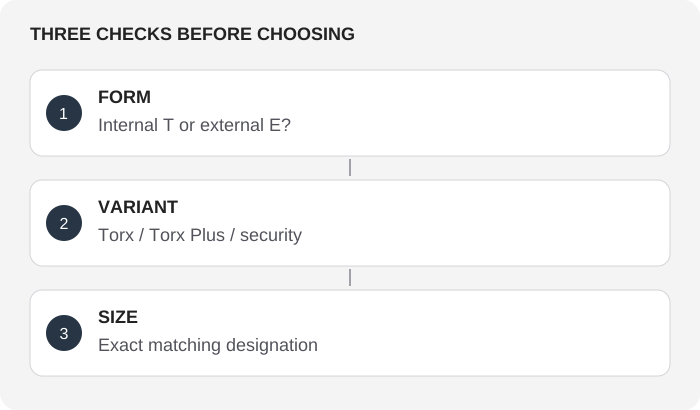
Internal Torx is a recess with six rounded lobes. The bit enters the recess. Common sizes are identified with T numbers such as T10, T20 and T25. These numbers are size designations, not measurements in millimeters.
External Torx has a projecting lobed head. A matching socket fits around it and uses an E designation. T and E numbers are different systems. A T20 bit does not correspond to an E20 socket simply because the numbers match.
When reading a listing, identify whether the tool is a bit for an internal recess or a socket for an external head. Photographs, the profile designation and the intended application should agree.
WHAT MAKES THE LOBES USEFUL
The rounded-lobe interface distributes contact differently from a simple cross recess. Good engagement can reduce the tendency to climb out compared with some other interfaces, but correct size, alignment and condition remain essential.
A worn Torx bit can damage a recess even if the original nominal size is right. An undersized bit may enter easily and still make poor contact. Use a bit that seats fully and does not wobble excessively.
The drive profile is not a torque specification. The permitted torque depends on the screw, material, joint and tool. Use the assembly’s required tightening procedure rather than assuming a Torx screw should be tightened as hard as possible.
STANDARD SECURITY TORX
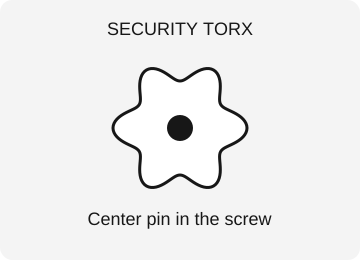
Security or tamper-resistant Torx commonly adds a center pin to the six-lobe recess. The corresponding bit has a central hole. The hole clears the pin while the six lobes provide engagement.
Names and suffixes used by sellers can vary, including security, tamper-resistant, TR and other markings. Read the description and picture; do not infer the presence of a hole from a T number alone.
A hollow bit can fit some compatible unpinned recesses, but that does not establish equal strength or suitability for every operation. Follow the bit’s rating. Do not use an ordinary solid bit on a pinned recess or force the pin aside as a normal service method.
TORX PLUS AND TORX PLUS SECURITY
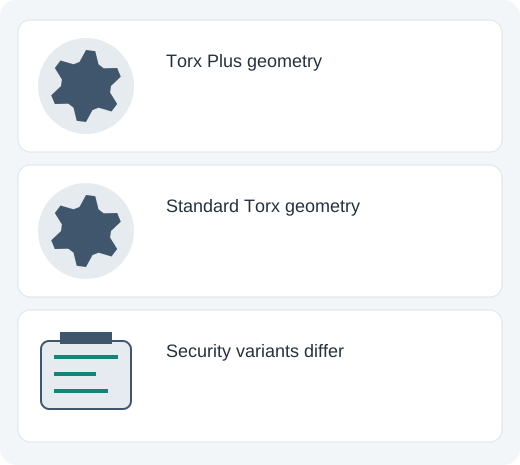
Torx Plus changes the six-lobe geometry to a broader profile and uses its own matching tools, often with IP designations. It is a separate interface from standard Torx. Partial engagement by another profile is not a suitable selection rule.
Torx Plus security is commonly a five-lobe, center-pin interface. That is different from the ordinary six-lobe Torx Plus design and from standard six-lobe security Torx. Count lobes and inspect the center before choosing a bit.
Pentalobe also has five lobes, but it is another geometry with its own sizing. “Five-point star” is therefore not enough information to buy the correct driver. Use the exact assembly or fastener designation.
OTHER SECURITY PROFILES
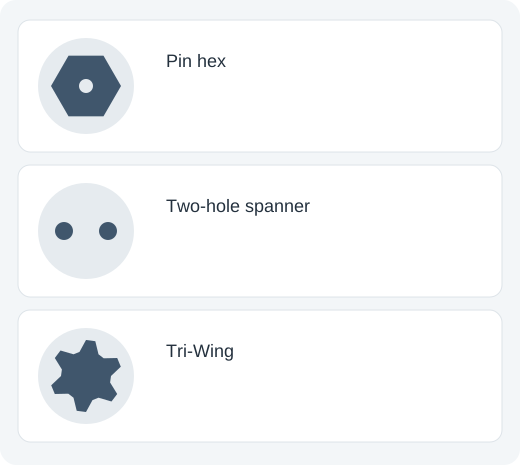
Security hex uses a hexagon with a center pin. Pin-in square uses a square with a pin. Two-hole spanner uses two separate holes, requiring the correct pin diameter and spacing. These are not Torx variants.
Tri-Wing, tri-point, triangle and Torq-Set are other specialist profiles that can discourage ordinary-tool access. Some are used for assembly requirements rather than primarily for security. The term security does not define one shared interface.
One-way screws use ramped engagement intended to resist removal in one direction. Their removal process may involve a dedicated extractor or the assembly’s prescribed service method. A general security-bit set does not necessarily include the right removal tool.
CHOOSING A SECURITY BIT SET
Check the contents by profile and size, not only total piece count. A 100-piece set can still omit the exact five-lobe size or spanner spacing you need. Duplicate standard bits do not fill specialist gaps.
Consider reach, shank format and holder compatibility. Small electronics may need long, slender precision tools. Industrial equipment may need a suitable socket bit or manual torque arrangement. Tool format matters as much as whether the tip looks right.
For powered use, check the bit and holder rating. A security recess does not automatically mean a bit is impact-rated. A central hole reduces material at the tip, making correct use and inspection especially important.
IDENTIFICATION AND FITTING WORKFLOW
Clean the recess enough to see its shape. Determine internal or external engagement. Count the lobes or arms; look for a central pin; compare the contact geometry with the illustrations. Then find the specified size.
Test the match without running a powered tool. Full seating, good alignment and the correct security clearance are required. If the bit stops at the pin, the hole or variant is wrong. If it rocks loosely, recheck the size and profile.
When the recess is damaged, do not use the distorted shape as the only identification evidence. Consult the assembly documentation or compare an undamaged identical fastener. Repeated trial with wrong bits can make the remaining recess unusable.
MAINTENANCE, STRIPPING AND COMMON QUESTIONS
Replace bits with twisted lobes, cracks or excessive rounding. Check a security bit’s center hole for blocked debris. A chip in a small hollow tip can prevent seating even if the exterior profile appears intact.
Is every star-shaped recess Torx? No. Torx Plus, pentalobe, triple-square and other toothed interfaces differ. Is every hollow bit a security Torx bit? No. Security hex and square also use holes.
Can I identify exact size from a photo? Usually not reliably without a known scale and clear geometry. Photos are useful for recognizing a family; specifications and physical fit determine the exact size.
Does tamper-resistant mean impossible to remove? No. It means the design requires an appropriate tool or method. For service work, use the designated tool rather than treating the fastener as an invitation to improvise a damaging substitute.
DISTINGUISHING SIMILAR-LOOKING STAR PROFILES
Standard internal Torx uses a six-lobed recess and a corresponding T-size tip. External Torx uses a lobed outside head and an E-size socket. These naming systems describe different mating forms; the same number in the two families is not a conversion. Identify whether you are driving inside a recess or surrounding an external head before selecting a tool.
Torx Plus has different contact geometry from standard Torx, even though both are often casually called star drives. A standard Torx bit may enter some Torx Plus recesses, but that does not establish correct contact or permit substitution. Use the drive family and size required by the fastener manufacturer. Do not infer compatibility from the marketing name star bit.
A standard security Torx recess adds a center pin, requiring a corresponding hollow tip. A Torx Plus security form can use a different lobe arrangement and remains a separate profile. Look at both the center feature and the outer geometry. A hole in the tip solves only clearance for the pin; it does not transform an incorrect lobe pattern into the right one.
When viewing a worn head, avoid relying on lobe count alone. Damage can flatten features, and lighting can hide the pin or make the recess appear differently shaped. Compare with a clean fastener or manufacturer documentation. Correct identification should precede controlled trial seating, and controlled seating should precede any significant force.
SELECTING A SECURITY SET FOR ACTUAL SERVICE WORK
Security fasteners discourage access with ordinary tools; they are not a single universal standard. A set might cover pin Torx, pin hex and spanner while omitting a proprietary appliance or electronics profile. List the assemblies you service and their documented fasteners. Then compare the exact profile and size list, not just the statement tamper-proof set.
Check access depth and outside clearance. A correct bit can still fail to reach a deeply recessed screw because its holder is too wide. Small security bits used for electronics also need controlled force and suitable handles; a high-output impact driver is not an automatic match just because it accepts the shank.
Mark common solid and hollow versions clearly. A center hole can be difficult to see in a dark storage tray, especially on very small tips. Keep profiles with five and six lobes separate. If a fastener resists seating, stop and inspect rather than pushing until an incorrect bit catches.
For reassembly, follow the equipment’s tightening procedure and replace damaged fasteners when appropriate. A security drive changes access requirements, not the joint’s need for correct preload, seating and thread condition. Specialized tips should be treated as precise mating tools rather than improvised extraction devices.
VISUAL REFERENCE ATLAS
AT A GLANCE
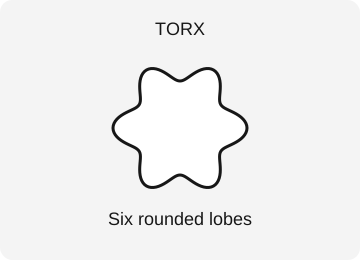
Illustrations explain the principle. They are not actual-size templates or precision fit drawings.
REFERENCES
General reference material. For an exact model, use its manufacturer’s specifications and instructions.
Torx