FASTENERS & DRIVES
RATCHET AND SOCKET DRIVE SIZES
Understand 1/4, 3/8 and 1/2-inch square drives without confusing them with hex bit shanks.
7 MIN READ
IN THIS GUIDE
WHAT THE SQUARE DRIVE CONNECTS
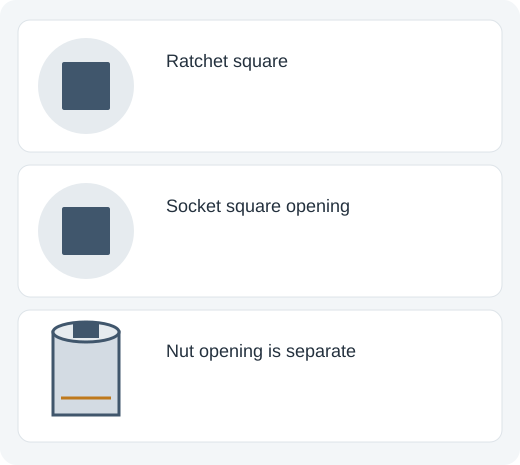
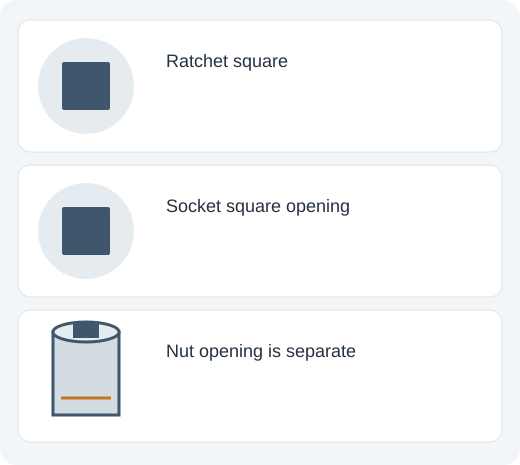
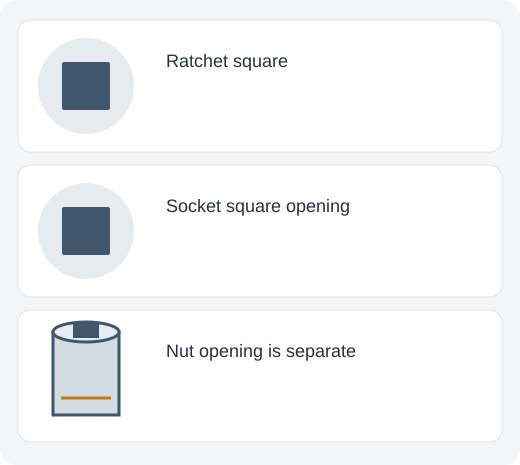
The square drive is the interface between a socket and the ratchet, breaker bar, torque wrench or powered wrench. It is separate from the socket’s working opening. A socket can be 10 mm at the fastener end and 3/8 inch at the drive end.
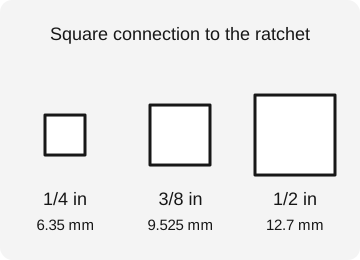
Nominal drive sizes describe the square’s width across flats. Common hand-tool sizes include 1/4, 3/8, 1/2, 3/4 and 1 inch. Their nominal metric equivalents are 6.35, 9.525, 12.7, 19.05 and 25.4 mm. These conversions explain dimensions; products are usually identified by their named drive system.
The drive size does not specify every clearance or strength dimension. Retention mechanisms, tool-head dimensions and accessory ratings vary. Always check the actual tool and accessory specifications for the work.
CHOOSING 1/4, 3/8 OR 1/2 INCH
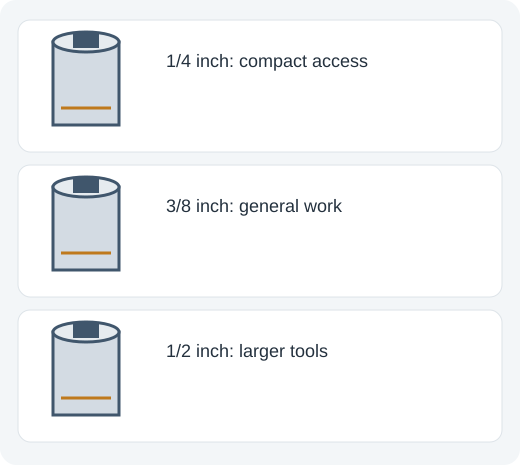
A 1/4-inch drive is compact and useful for small fasteners, confined spaces and suitable lighter loads. Its small size improves access, but it is not intended to be treated like a large breaker bar.
A 3/8-inch drive is a versatile middle size for many maintenance tasks. A 1/2-inch drive is common for suitable larger fasteners and heavier work. This is a practical pattern rather than a torque-rating table: the exact tool rating controls.
Larger 3/4-inch and 1-inch systems are used for appropriate heavy-duty work. They are bigger and heavier, which can be unnecessary for small assemblies. Choose enough capacity without losing the access and control the job needs.
RATCHET, BREAKER BAR AND TORQUE WRENCH
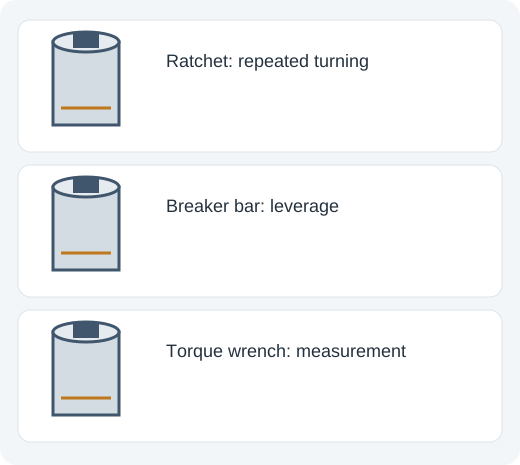
A ratchet allows repeated turning without removing the socket after every stroke. Tooth count and mechanism design affect the reset angle, but high tooth count does not automatically mean greater strength. Head thickness and handle length also affect usability.
A breaker bar is designed for controlled leverage in suitable loosening or tightening operations. Do not add an improvised pipe to a handle unless the tool instructions explicitly allow that setup. A longer lever raises the torque applied to the fastener and every component in the connection.
A torque wrench measures or controls torque within its stated range and accuracy conditions. Choose a range that suits the specified fastener torque. Use its prescribed grip position, direction and operating method; a matching square drive does not make an unsuitable torque range acceptable.
EXTENSIONS AND JOINTS
A straight extension moves the socket farther from the tool head. It can reach a recessed fastener but may add flexibility and make alignment harder. More length is not automatically better.
A wobble extension or universal joint allows angular access within its intended range. Powered use requires appropriate ratings, and a rotating joint can behave differently from a straight manual extension. Keep hands, clothing and surrounding parts clear of moving accessories.
Distinguish a straight coaxial extension from an offset crowfoot adapter. A straight extension normally does not change the effective torque-wrench lever length in the same way an in-line offset adapter does. For crowfoot and offset arrangements, follow the torque-wrench and adapter instructions for any required correction.
ADAPTERS DO NOT CREATE CAPACITY
An adapter can connect different drive sizes, such as a 3/8-inch tool to a 1/2-inch socket. It changes the interface, not the capacity of the smaller tool or adapter. The weakest rated component limits the setup.
An adapter from a hex impact-driver holder to a square drive has additional restrictions. Check that it is intended for the tool and the load. A compact impact driver is not a direct substitute for every dedicated impact wrench.
Use impact-rated adapters, extensions and sockets for impact work. A suitable socket fitted through a non-rated joint remains an unsuitable impact setup. Inspect adapters especially closely because their reduced sections can be vulnerable under load.
RETENTION AND FIT
Many hand tools use a spring-loaded detent ball. Powered tools may use a friction ring, detent pin or other retention system. The socket and tool must fit the intended retention design; nominal square width is only part of the connection.
A socket should seat fully. Dirt, burrs, paint or a damaged drive opening can stop it from engaging. Check that it is retained as the tool instructions require. A loose connection can let a heavy socket fall or cause poor control.
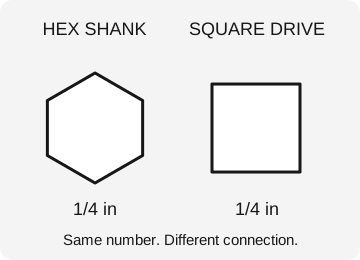
Do not force mismatched interfaces together. A 1/4-inch hex bit and a 1/4-inch square-drive socket both contain “1/4 inch,” but their shapes and retention are different. They need a suitable adapter rather than direct connection.
A PRACTICAL SELECTION WORKFLOW
Identify the fastener size and required operation. Estimate access constraints and use the specified tightening torque when available. Choose a tool with suitable capacity, then choose a matching drive system and socket profile.
Add only the extension or joint needed for access. Verify every component’s powered or manual rating. Test that the socket seats and is retained before applying load. For final specified torque, use the prescribed torque method.
If the setup flexes excessively, slips or cannot align with the fastener, reconsider the arrangement. A larger drive does not solve every access problem; a different head form, socket depth or approach angle may be the better solution.
QUESTIONS AND MISTAKES
Can a smaller ratchet use a larger socket? Sometimes through a suitable adapter, but the smaller tool’s limits still apply. The socket’s size does not upgrade the ratchet.
Does a bigger square drive always mean a stronger tool? It is associated with different tool families, but actual ratings and construction matter. Do not infer a safe working torque from drive size alone.
Does a straight extension require a torque correction? Usually not simply because it extends along the socket axis, but follow the instrument’s instructions. Offset adapters that change effective lever length are a different case.
Common mistakes include using ratchets as unlimited breaker bars, selecting an oversized system that cannot reach the work, using unretained sockets overhead, and mixing impact-rated and non-rated components.
FOLLOWING THE LOAD THROUGH A SOCKET ASSEMBLY
Consider a half-inch-drive impact wrench connected to a reducer, a smaller extension and a socket. The drive-size fraction tells you the nominal square interface at each connection. It does not provide a torque rating for the complete assembly. The reducer and smaller components remain subject to their own ratings even though the wrench can generate much greater output.
Each additional interface adds a place where movement, wear or misalignment can occur. Keep the assembly as short and straight as the job reasonably permits. An extension can solve reach; a joint can solve an angle; neither is free of practical effects. Use the accessory within its stated angular and operating limits, and support the work so that sideways loading does not damage the tool or fastener.
A torque wrench with an offset attachment can require a calculation because the effective lever geometry changes. An ordinary straight extension along the drive axis is different from an offset extension that changes effective handle length. Use the torque wrench and attachment manufacturer’s procedure instead of applying a correction copied from a geometrically different arrangement.
The sensible order is to identify the fastener, choose an appropriate socket, determine access, and select a rated driver and any necessary accessories. Starting from the strongest available wrench and adapting down to any socket that fits reverses the reasoning. Physical connectivity is necessary, but application suitability and load rating remain separate checks.
ORGANIZING DRIVE SIZES FOR EVERYDAY WORK
A compact drive system is convenient for small fasteners and limited space; a larger system can accommodate accessories designed for heavier work. These are practical tendencies, not universal torque boundaries. The actual ratchet, socket, fastener and manufacturer rating control the permitted application. There is no single safe torque number that follows from a drive fraction alone.
Keep reducers visibly distinguishable from ordinary extensions. Record which accessories are approved for impact use, and keep unapproved hand-tool adapters away from an impact-tool kit. Where a job repeatedly requires reduction, consider obtaining the correct socket interface so the working chain has fewer parts and fewer opportunities for accidental misuse.
Check retention before moving a tool assembly over a workpiece or into a confined opening. Detent balls, pins and retaining rings are not identical mechanisms. A socket that falls off can damage the work or make the job difficult, while an incorrect pin or ring can interfere with fit. Use the retention system intended for the tool and socket.
For final tightening, choose a torque wrench with a range and accuracy specification appropriate to the required value. A large drive does not automatically mean useful measurement accuracy at a very low setting. Keep calibration and storage requirements separate from the mechanical drive-size decision.
VISUAL REFERENCE ATLAS
AT A GLANCE
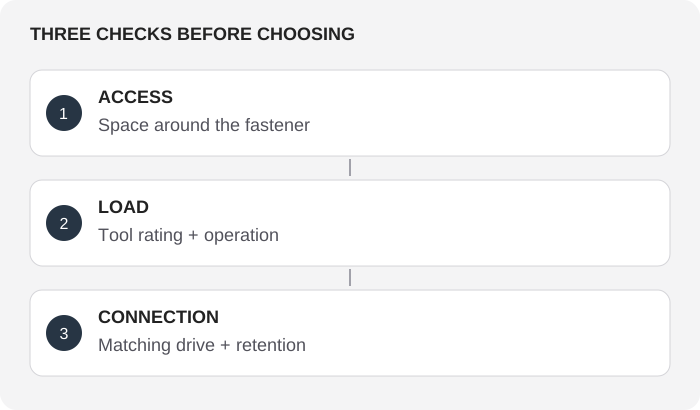
Illustrations explain the principle. They are not actual-size templates or precision fit drawings.
| Square drive | Exact nominal conversion |
|---|---|
| 1/4 in | 6.35 mm |
| 3/8 in | 9.525 mm |
| 1/2 in | 12.7 mm |
| 3/4 in | 19.05 mm |
REFERENCES
General reference material. For an exact model, use its manufacturer’s specifications and instructions.
Socket wrench