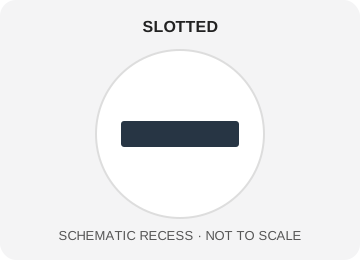
SLOTTED
A single straight slot.
Match blade width and thickness.FASTENERS & DRIVES
Compare common, specialist and security profiles. Choose the shape first, then the exact size.
9 MIN READ
A screw has a head shape, a drive profile, a drive size and a thread. The head might be countersunk or domed; the drive might be Phillips or Torx; the size might be PH2 or T20. Those are different facts. A flat-head screw does not necessarily use a flat screwdriver: it can have a Torx recess in a countersunk head.
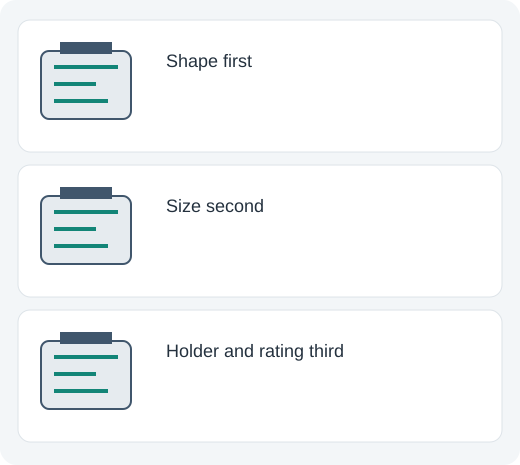
Begin with the recess shape. Then confirm the size specified for the fastener. Finally choose a bit length and holder suited to access and the tool. A longer bit reaches farther but does not change the nominal profile size.
A correct bit should engage fully and sit squarely in the recess. Excess movement, contact only at the corners or an inability to seat are reasons to stop and recheck. A bit that can turn an unloaded screw can still be wrong under fastening load.
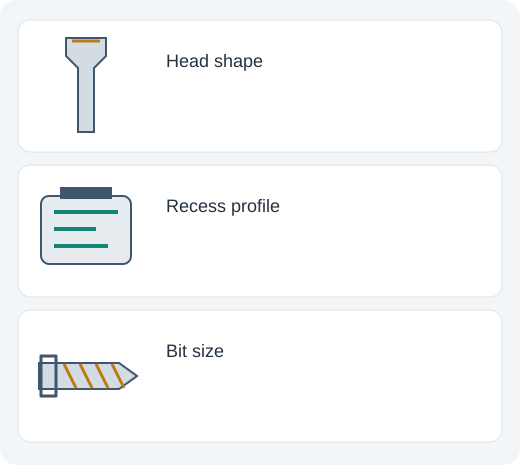
Slotted screws have one straight slot. The blade width and thickness both matter. A blade that is too narrow concentrates force on a small part of the slot; one that is too thick may not seat. A wide blade that sits only on the slot edges can also damage the head.
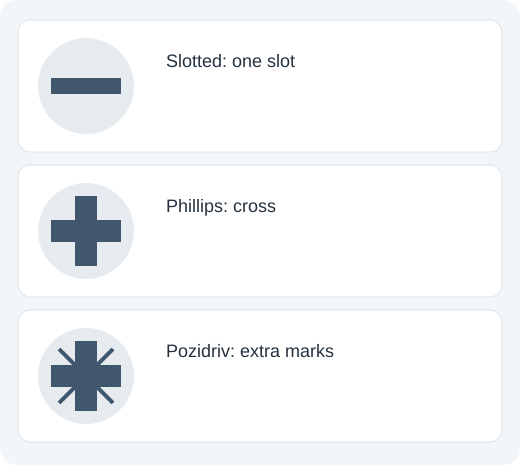
Phillips uses a cross-shaped recess and PH size markings. Pozidriv uses a different cross geometry with secondary ribs; PZ markings identify its bits. Additional cross markings on a screw can help identify Pozidriv, but use the specification when markings are unclear. PH2 and PZ2 are not interchangeable merely because both include a 2.
Cam-out means the driver climbs out of the recess while turning. Wrong size, poor alignment, insufficient engagement and damaged contact surfaces can cause it. Greater trigger pressure does not fix an incorrect profile. Repeated cam-out damages both the bit and the screw.
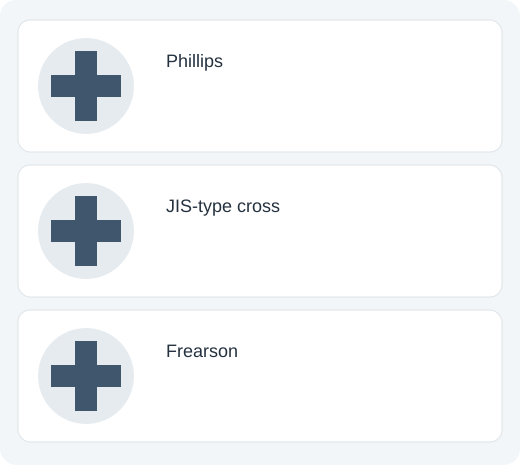
Frearson, sometimes called Reed & Prince, has a different cross geometry from Phillips. It can look similar in a small photograph. Match its specified driver rather than choosing any cross-shaped tip that enters the recess.
Japanese cross-head fasteners are often discussed under the JIS label. Some screws have identifying marks, but a dot alone is not a universal identification rule. Product age, manufacturer and applicable standards matter. Use a driver specifically suited to the fastener when ordinary Phillips engagement is poor.
Combination-drive heads may accept more than one specified tool, such as a slot and a cross. That does not make every cross or blade size appropriate. Confirm the intended profiles and choose the one that provides full engagement for the required operation.
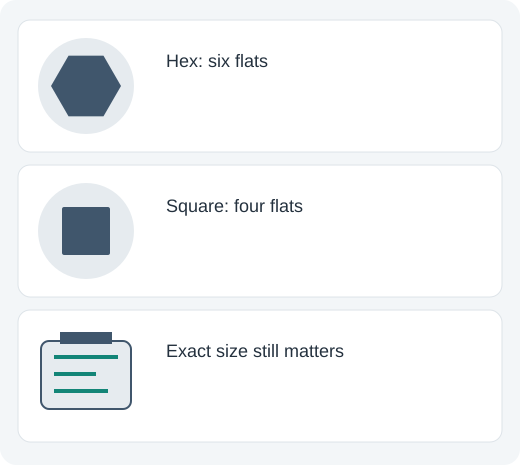
Hex or Allen recesses have six straight sides. Their sizes can be Metric or SAE. A 4 mm key is not automatically interchangeable with a nearby inch size. Small dimensional differences become important when the fastener is tight or the recess is shallow.
Square, often called Robertson, uses a square recess and numbered sizes. The square profile helps retention in many applications, but the correct number still matters. Color coding on sets can be helpful; it is not a substitute for the specified size across all manufacturers.
Ball-end hex keys improve access at an angle, while straight ends provide full axial engagement. A ball end is not the universal choice for final high-load tightening or initial loosening. Follow the tool’s limits and use the straight end where appropriate.
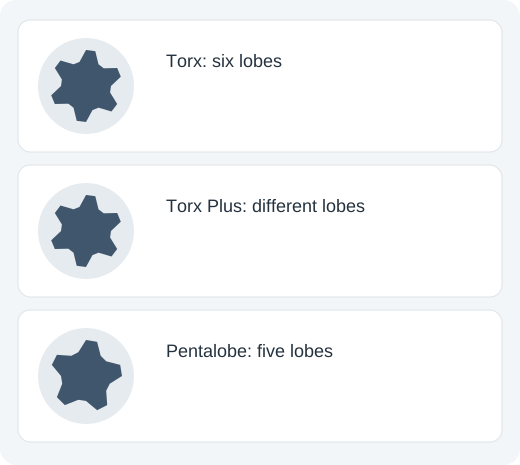
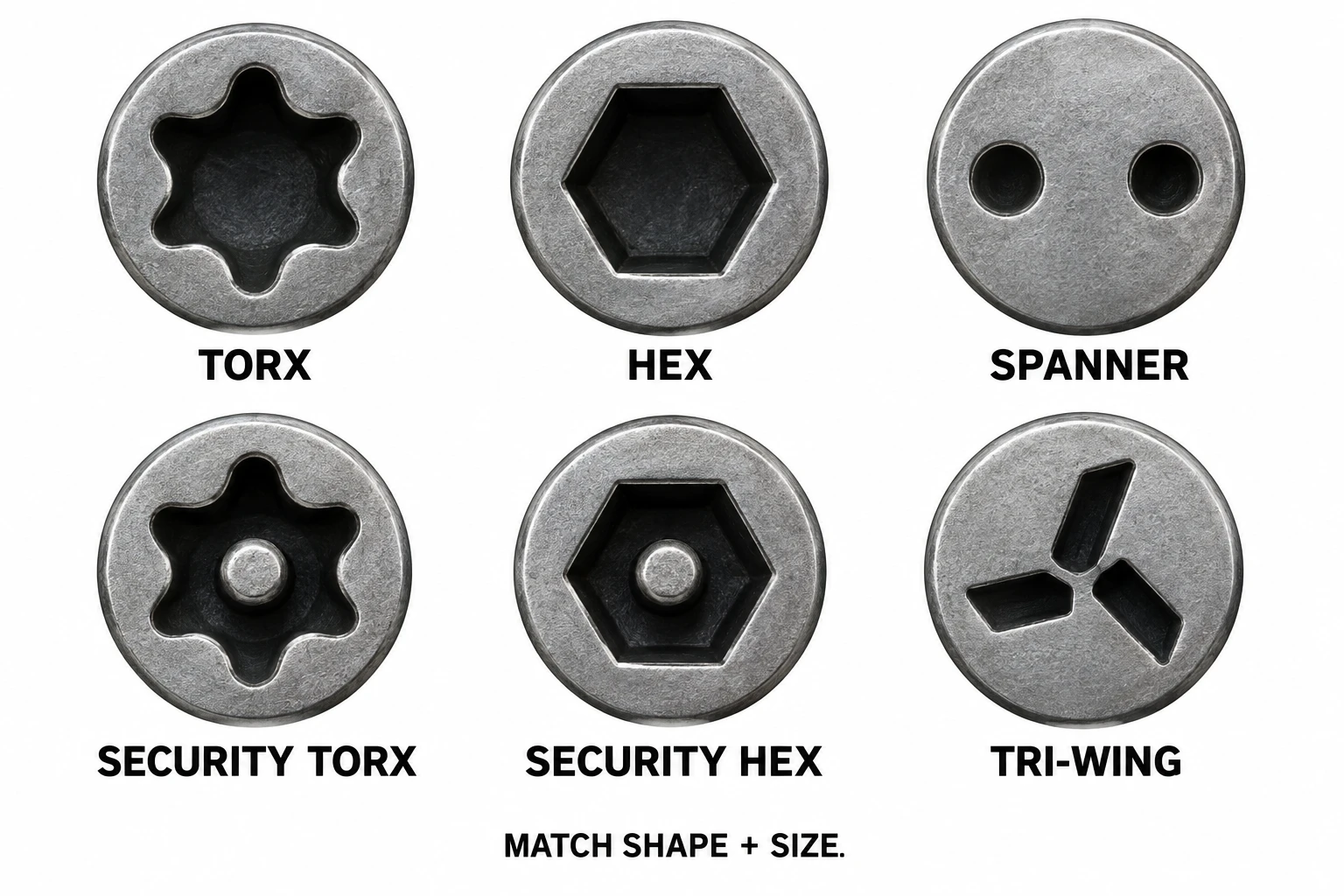
Standard internal Torx has six rounded lobes and T size markings. External Torx heads use corresponding E sockets, which are a different form. A T20 bit is for an internal recess; it is not an external-head socket.
Torx Plus changes the lobe geometry and uses its own designations. A standard Torx bit that partly engages a Torx Plus recess does not establish an approved substitution. Use the exact profile for full engagement and rated performance.
Pentalobe has five lobes and is seen in some small electronics. Five-lobe Torx Plus security is a different design. Counting the lobes is a useful first clue, but the actual shape, pin and size must all match.
Triple square, also called XZN, has a twelve-point interface. Generic spline and Bristol spline have other contact geometries. RIBE and Polydrive are separate specialist interfaces. Do not treat all toothed or star-like recesses as Torx.
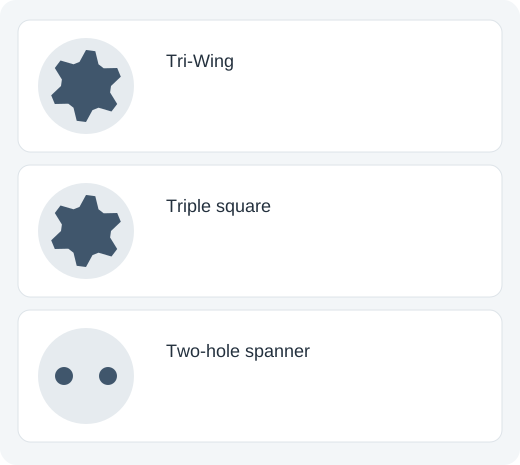
Tri-point has three arms meeting as a Y. Tri-Wing has three offset wings. Torq-Set has an offset four-arm cross. These profiles are easy to confuse in a small listing photo, so compare the center and the way each arm joins the others.
Triangle, clutch Type A, clutch Type G and one-way profiles have their own geometry. One-way screws use ramps intended to resist turning in the removal direction; a normal slotted driver may not remove them. Specialist removal tools and the assembly’s service procedure can be necessary.
A security feature can be a center pin, an unusual profile or a drive designed to resist ordinary removal. “Security” is a family description, not one standardized size. Security Torx and security hex need a bit with the correct center hole to clear the pin.
Two-hole spanner, sometimes called snake-eye, needs two pins with the proper spacing and diameter. Pin-in square needs a hollow square bit. Five-lobe Torx Plus security needs its own matching tool. A security bit kit may include several of these, but the contents and sizes differ.
A center hole alone does not identify a bit. A hollow Torx bit does not fit a hex recess with a pin. Match shape, size and security feature together. Do not force an ordinary bit onto a pinned fastener or break the pin as a routine fitting method.
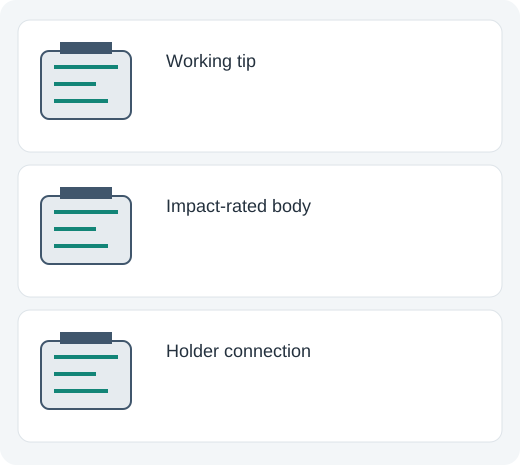
The tip profile tells you what screw it fits. The shank tells you what holder it fits. A common hex shank can carry many different tip profiles. Check retention and permitted use for the exact bit and holder.
Use impact-rated bits and accessories when the tool and application require them. Marketing color, a black finish or a torsion-looking waist does not independently prove a rating. A manual precision bit may have the correct tip but still be unsuitable for a powered impact driver.
For precision electronics, select a tool that provides controlled manual torque and good alignment. For repeated fastening, bit quality, full engagement and the correct driver mode matter. Replace worn tips rather than compensating with extra force.
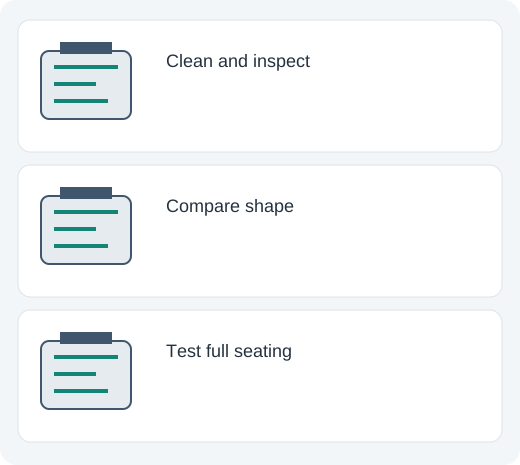
Clean enough dirt from the recess to see the shape. Look for a slot, cross, square, hexagon, rounded lobes or multiple teeth. Count lobes or arms and check for a center pin. Compare against the illustrated profiles on this page.
Read the assembly manual or fastener packaging for the exact designation and size. Try the matching bit without power and confirm full seating. If two candidates both enter, do not choose by appearance alone: contact geometry and specified size decide.
If the recess is damaged, normal identification becomes less reliable. Use an appropriate repair or extraction method for the assembly rather than repeatedly trying undersized bits. A stripped screw is not evidence that a different nominal profile was intended.
Is the number the width in millimeters? Sometimes for Metric hex, but not for PH, PZ, T or many specialist designations. Learn each system rather than translating all numbers as dimensions.
Can one security set cover every screw? No universal set covers all proprietary, regional, industrial and legacy interfaces. Check the included profiles and sizes against the actual fasteners you service.
Before turning: correct profile; correct size; complete seating; appropriate holder; suitable manual or impact rating; sufficient access; and the intended tightening method. The visual atlas is a recognition aid, not a precision template or a replacement for an exact fastener specification.
Illuminate the head and remove loose debris without changing the recess geometry. Count the main contact features: one slot, four arms, six flats, four flats, five lobes or six lobes. Then inspect secondary features such as the extra marks of Pozidriv, a center pin, offset wings or a different lobe form. A phone photograph can help enlarge what is present, but reflections and damage can disguise the shape.
Look at candidate tips from directly in front. A correct profile should match the contact geometry, and the correct size should seat to the intended depth without pronounced rocking. Do not test compatibility by applying high torque. A wrong bit can initially catch on a few edges, then destroy the recess before the operator realizes it was only a near match.
Keep head shape separate from drive profile. A countersunk screw can have Phillips, Torx, hex or another recess; a pan-head screw can use many of the same profiles. The head controls how the fastener bears against the joint. The recess controls how the driver transmits torque. Choosing the bit from the outside silhouette of the head skips the relevant interface.
If the recess is already stripped, the original profile may no longer be identifiable by fit alone. Use documentation, an undamaged matching fastener or the assembly manufacturer’s information where possible. Extraction is a separate repair operation: an extractor, cutting a slot or replacing the fastener is not the same as establishing that an incorrect bit is compatible.
Organize bits by profile, then size, then length or special feature. Keep security versions distinguishable from their solid counterparts and keep Pozidriv separate from Phillips. Similar marks and identical-looking shanks make loose mixed storage a common source of wrong-bit selection. Legible labels on the holder are often more useful than a very high total piece count.
Include profiles that actually occur in your work. General construction fastening, machinery service and consumer-electronics repair can need very different collections. Specialist bit sets may provide pentalobe, Tri-Wing, spanner or other forms, but proprietary fasteners and regional variations still exist. A set described as universal cannot establish coverage for every assembly.
Choose bit length and holder configuration for access without sacrificing seating. A long bit can reach a recessed head, but introduces flexibility and requires alignment. A short insert bit may need a separate holder. The working profile can be correct while the shank or retention groove is wrong for the driver; both interfaces must be checked.
For powered impact work, verify the rating of the bit, holder and extension, and use the fastener installation procedure. Impact approval does not prevent a small tip from failing if the profile is wrong or the tool is badly aligned. Replace tips that have rounded contact surfaces, chipped edges or excessive wear rather than compensating with increased pressure.
Look into the screw recess. These diagrams show shape, not actual size. Profiles that look similar may have different contact geometry.
A single straight slot.
Match blade width and thickness.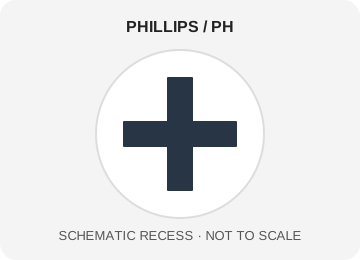
A cross with tapered contact faces.
PH and PZ are different profiles.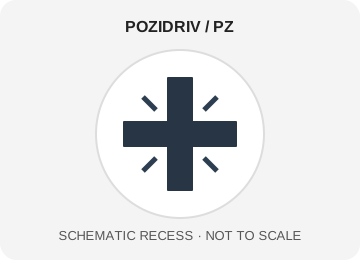
Cross plus four secondary ribs.
Use PZ, not a Phillips substitute.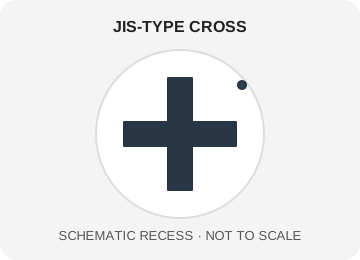
Japanese cross recess; markings vary.
A dot can be a clue, not proof. Confirm specification.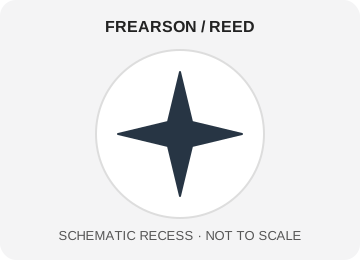
A pointed cross profile.
Similar to Phillips, but different contact geometry.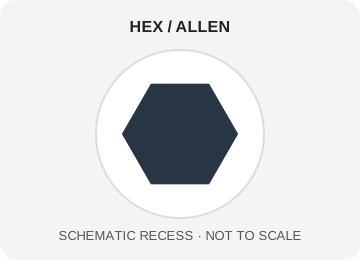
Six straight sides.
Metric and SAE sizes are not interchangeable.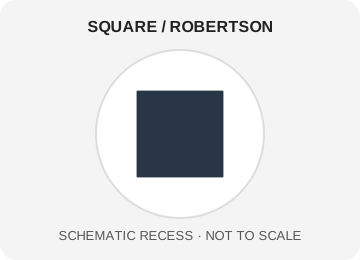
Four straight sides.
Choose the specified numbered size.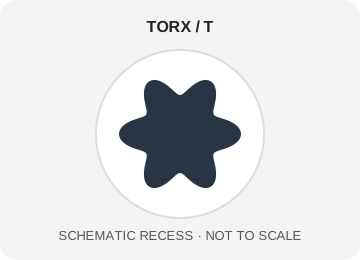
Six rounded lobes.
T numbers name sizes, not millimeters.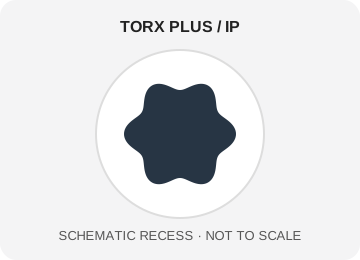
Six broader lobes; changed geometry.
Requires the specified Torx Plus bit.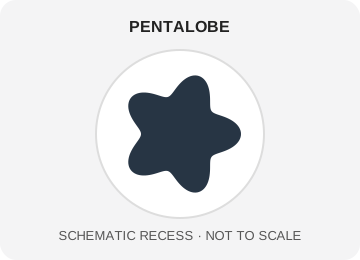
Five rounded lobes.
Not Torx and not five-lobe Torx Plus security.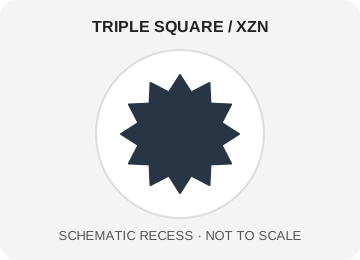
Twelve-point triple-square interface.
XZN is not a Torx or a generic spline.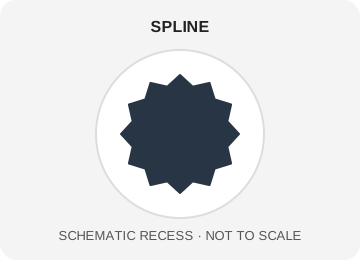
Multiple straight radial teeth.
Tooth count and geometry must match.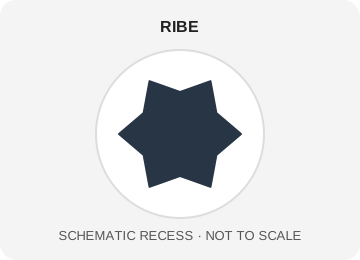
Six-tooth fluted interface.
Use the specified RIBE size.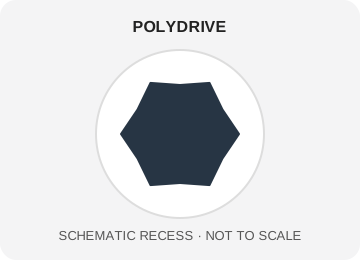
Six-lobe proprietary interface.
Do not substitute RIBE, Torx or hex.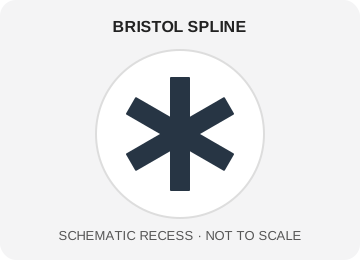
Straight-sided spline slots.
Bristol comes with different spline counts.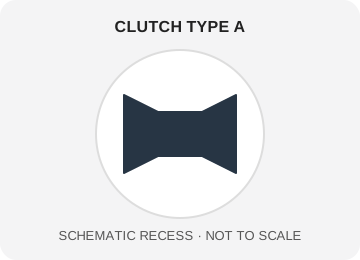
A bow-tie style interface.
Type A and Type G are distinct.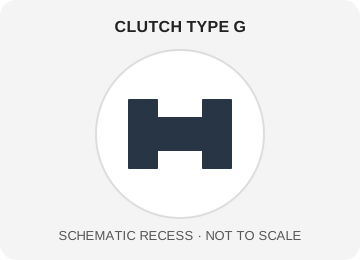
A butterfly-style clutch interface.
Confirm the manufacturer’s clutch type.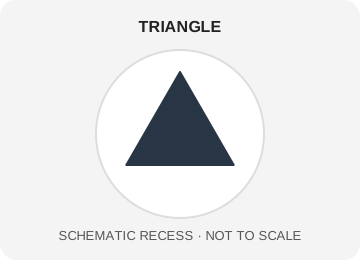
A triangular recess.
Size and rounded-corner variants differ.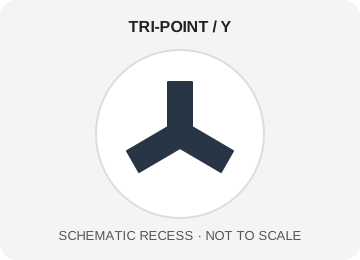
Three arms meeting at the center.
Tri-point and Tri-Wing are different.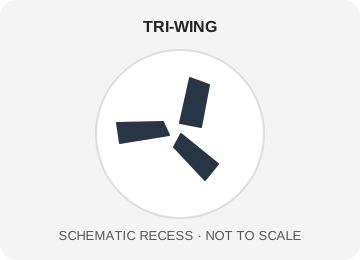
Three offset wings.
The wings do not meet as a simple Y.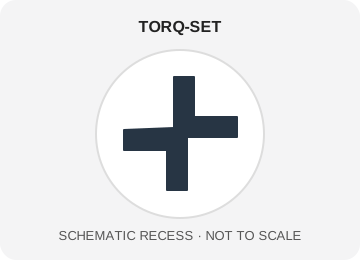
An offset four-arm cross.
Not Phillips; needs its matching bit.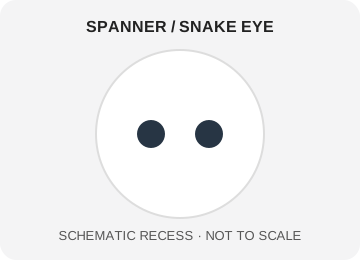
Two separate round holes.
Match both pin spacing and pin diameter.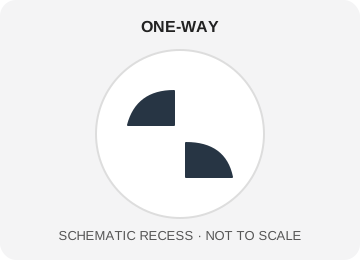
Slotted ramps intended for one direction.
Removal can require a dedicated extraction tool.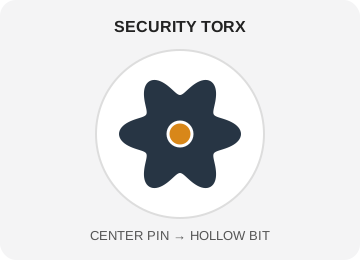
Six lobes with a center pin.
Use the correct hollow security bit.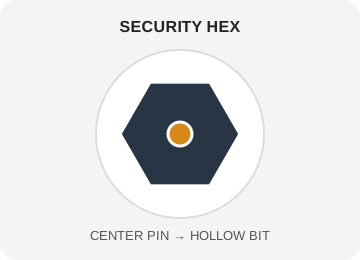
Hexagon with a center pin.
The bit needs a matching center hole.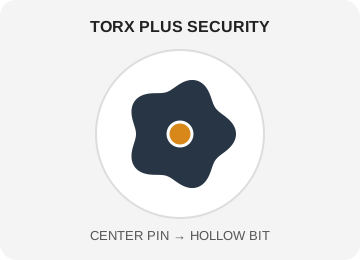
Five lobes and a center pin.
Different from standard six-lobe Torx Plus.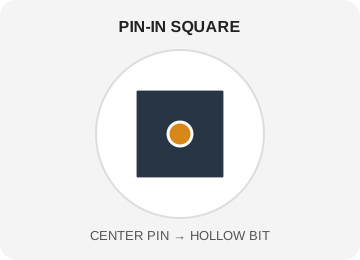
Square with a center pin.
Ordinary square bits cannot clear the pin.This covers common and specialist profiles, including security variants. Proprietary and regional designs also exist; use the fastener specification for an exact match.
| Profile | Common marking | Shape |
|---|---|---|
| Slotted / flat | Blade width × thickness | Straight slot |
| Phillips | PH0, PH1, PH2… | Cross |
| Pozidriv | PZ1, PZ2… | Cross with additional ribs |
| Torx | T10, T15, T20… | Six rounded lobes |
| Hex / Allen | Metric or SAE size | Hexagon |
| Square / Robertson | Numbered sizes | Square |
General reference material. For an exact model, use its manufacturer’s specifications and instructions.
List of screw drives