FASTENERS & DRIVES
SOCKET SIZES: METRIC AND SAE
Read the fastener size separately from the ratchet drive size.
8 MIN READ
IN THIS GUIDE
THE THREE MEASUREMENTS PEOPLE CONFUSE
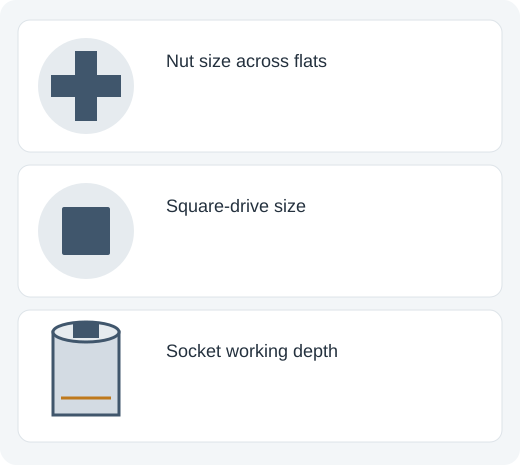
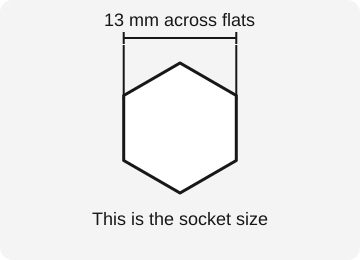
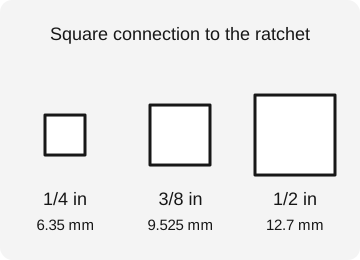
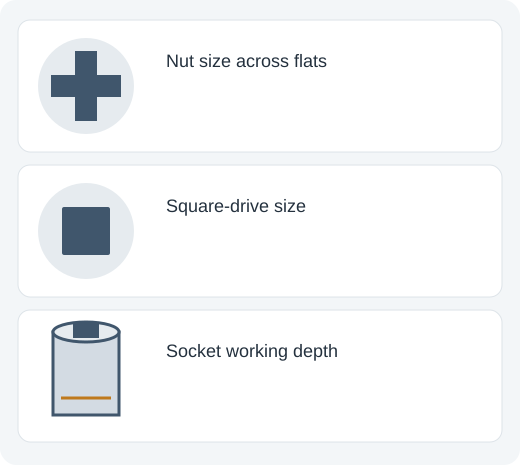
A socket has a working opening, a drive opening and a length. The working opening fits the fastener: for an ordinary hex nut, that is its width across opposite flats. The square drive fits the ratchet or wrench. Length describes reach and clearance. A 13 mm socket can have a 1/4-inch, 3/8-inch or 1/2-inch square drive.
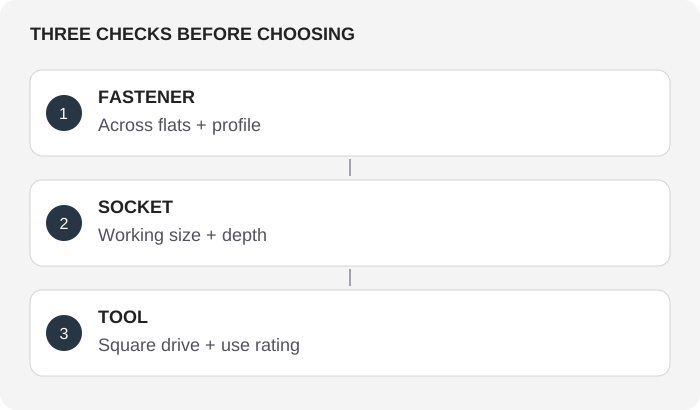
These measurements answer different questions. First identify the fastener size and profile. Then choose a drive system with suitable capacity. Finally decide whether a shallow, deep or specialty-length socket reaches the fastener without hitting surrounding parts.
Thread diameter is another separate measurement. An M8 thread does not mean an 8 mm socket opening. Different fastener standards and head styles can use different wrench sizes for the same thread diameter. Measure the actual head or use its specification.
METRIC AND SAE SIZING
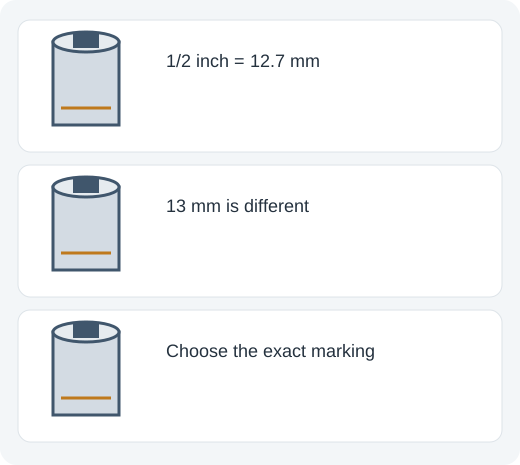
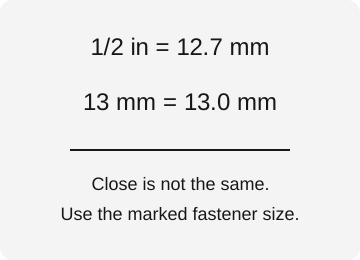
Metric socket sizes are expressed in millimeters. SAE sets use inch fractions such as 3/8, 7/16 and 1/2. One inch is exactly 25.4 mm, so 1/2 inch is 12.7 mm. It is close to 13 mm but is not the same nominal size.
A close-looking substitute may seem to fit while contacting the fastener poorly. Under load it can slip or round the corners. Use the correct system and size, especially on tight, corroded or high-value fasteners. Do not treat a conversion chart as an interchangeability chart.
To measure a normal hex head, measure across parallel flats rather than across corners. Calipers help when the marking is unclear. Clean paint, dirt or corrosion that prevents proper seating; contamination can make the correct size appear too small.
SIX-POINT, TWELVE-POINT AND OTHER PROFILES
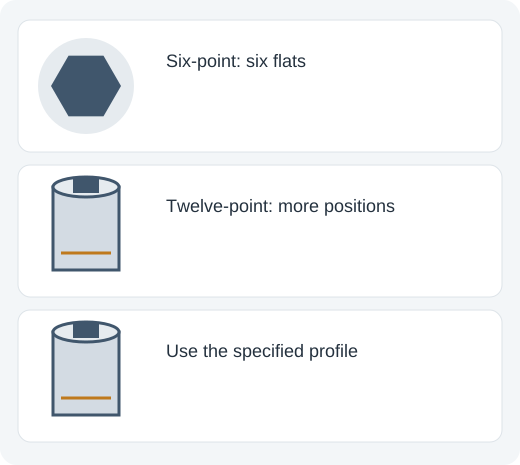
A six-point socket has six working positions for a hex fastener. A twelve-point socket provides additional orientations, which can make engagement easier in a confined space. It is also necessary for some twelve-point fastener heads. Match the fastener profile instead of deciding only from the number of points in the socket.
For difficult hex fasteners, a suitable six-point socket is often preferred because of its engagement geometry. That preference does not mean every six-point design has the same strength or that a twelve-point socket is inherently defective. Quality, fit, wall thickness and the fastener condition also matter.
External Torx, square, spline and specialty heads need corresponding sockets. An E-Torx external fastener is not a T-number internal Torx recess. A generic hex socket that seems to catch an external Torx head is not an acceptable substitute.
SHALLOW, DEEP AND CLEARANCE
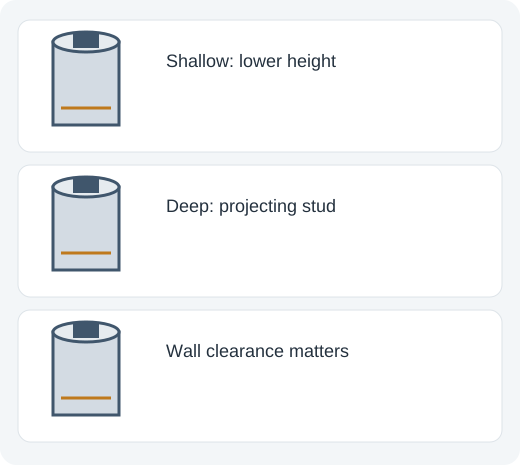
A shallow socket is compact and can fit spaces where a long socket hits a nearby panel. A deep socket can reach a nut on a long stud or a recessed fastener. The actual internal clearance matters: a socket described as deep may still have a restricted internal section.
Thin-wall sockets can reach into recessed wheels or other close-fitting spaces, but thin walls change strength and permitted use. Use a product intended for the load and tool. Wheel-protection sleeves protect finishes only when their dimensions and handling are appropriate; they do not make the socket fit every wheel opening.
Extensions improve reach. Universal joints and wobble extensions allow angular access, within their rating and geometry. Adding several adapters or joints can make control worse and can introduce weaker links. Use the shortest workable setup for the task.
HAND SOCKETS AND IMPACT SOCKETS
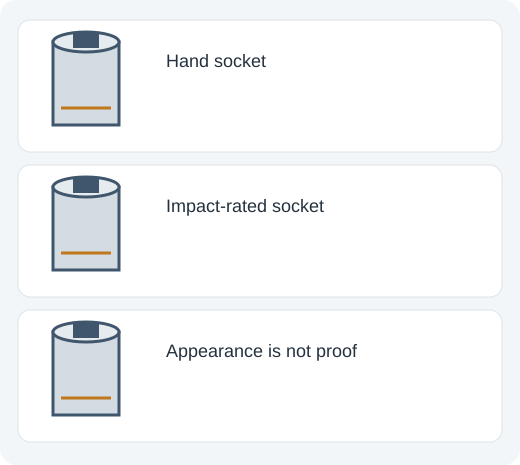
Hand sockets are intended for manual ratchets and related tools. Impact sockets are designed and rated for repeated impacts from powered impact tools. Finish alone is not proof: a black socket is not automatically impact-rated and a chrome appearance is not a complete material specification.
Check the manufacturer’s impact rating for the socket, extension, universal joint and adapter. The full chain must suit the tool. An impact socket on a non-rated adapter does not make the adapter suitable. Wear eye protection and inspect parts for cracks and distorted drive openings.
A ratchet is not necessarily a breaker bar. For initial loosening of a tight fastener, use a tool intended for that load. For final tightening to a specified torque, use a suitable torque wrench or other calibrated method rather than guessing from impact sound.
BUILDING A USEFUL SET
Start with the sizes you actually use. A smaller set with suitable sizes, clear markings and a good fit can be more useful than a very large mixed set with gaps in the needed range. Decide whether your work needs Metric, SAE or both.
Choose square-drive sizes around load and space. Small drives are compact; larger drives support suitable larger tools and sockets, but drive size is not a guaranteed torque rating. For frequently used sizes, both shallow and deep sockets may be more useful than duplicate seldom-used sizes.
Specialty work can require spark-plug sockets, oxygen-sensor sockets, external Torx or insulated sockets. Confirm the task requirements rather than assuming a universal set covers every interface. Insulated tools have their own ratings and inspection requirements.
READING A LISTING BEFORE BUYING
Look for working size, Metric/SAE designation, point count, square drive, depth, material or rating, and whether it is a single socket or a set. A “1/2-inch socket” description is ambiguous without context: it can describe the fastener opening or the square drive.
Set piece counts may include ratchets, extensions, bits and adapters. Forty pieces does not mean forty socket sizes. Review the contents list, especially if you need a particular size to finish a job.
Check dimensions when clearance is tight. Outside diameter and total length can matter as much as the marked fastener size. A correctly sized socket that cannot reach the fastener is still the wrong choice for the setup.
PRACTICAL EXAMPLE AND COMMON MISTAKES
For a hex fastener that measures 13 mm across flats, choose a 13 mm working opening. If access is cramped and the load suits a compact manual setup, a suitable 3/8-inch-drive shallow socket may work. If the nut sits on a long stud, check whether a deep socket has enough internal clearance.
If using an impact wrench, choose impact-rated components throughout. If the fastener requires a final torque, use the specified tightening procedure. The correct socket helps engagement; it does not determine the required torque.
Avoid these mistakes: selecting from thread size alone; measuring across corners; mixing close Metric and SAE sizes; hammering an unsuitable socket onto a damaged fastener; using a damaged drive opening; and using a powered impact tool with non-rated accessories. Each mistake can turn a simple fitting problem into a damaged fastener or broken tool.
MEASURING AN UNMARKED FASTENER AND CHECKING ACCESS
Clean enough dirt and corrosion from the fastener to identify its shape. On a conventional hex nut or bolt head, measure between opposite flat faces with a suitable caliper. Measuring corner to corner gives a larger value and points you toward the wrong socket. If wear or corrosion prevents a reliable measurement, compare correctly sized sockets carefully rather than assuming that the first one that slides on is correct.
Read the socket’s size and system markings. A metric 13 mm socket and a 1/2-inch socket are close in nominal dimension but are not interchangeable specifications. Small clearance differences can concentrate force at corners, especially on a damaged fastener or during high-load work. Fit means the correct intended size and profile, fully seated; it does not mean merely being able to turn the fastener at low force.
Check the surrounding pocket as well as the head. The outside diameter and wall thickness of a socket can prevent access even when the opening size is right. A long projecting stud can require a deep socket, but a deep socket adds height to the tool assembly. Confirm clearance for the complete ratchet, extension or wrench rather than checking the socket alone.
For a recessed or delicate application, protect nearby surfaces as needed and use the manufacturer’s specified profile and torque procedure. A wheel-protection sleeve, thin-wall body or special external profile is an application feature, not a universal substitute for a standard socket. Never grind a socket thinner to solve a clearance problem without an approved engineering basis.
PLANNING A SOCKET SET AROUND THE JOBS YOU ACTUALLY DO
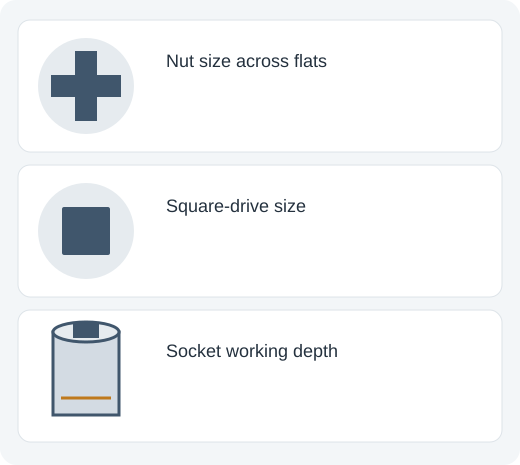
Make a short inventory of frequently used fastener sizes and available working clearance. Add the ratchet drive sizes you own and whether the work uses hand tools, torque wrenches or powered impact tools. This produces a useful selection matrix: opening size, drive interface, depth and impact approval. A large piece count can include many items outside that matrix.
Compare the actual list of sizes in two sets rather than their maximum and minimum alone. A set can omit a common intermediate size. Also distinguish sockets from adapters, extensions, bits and duplicate deep versions in the advertised count. These accessories may be useful, but a 100-piece set does not mean 100 different fastener openings.
If both SAE and metric work are common, label storage clearly and keep the systems separated enough to reduce accidental near matches. Replace missing frequently used sizes individually when appropriate. Choose six-point or other profiles according to the fastener and application; twelve-point access can be useful, but more engagement positions are not a guarantee of better grip on damaged hex heads.
Inspect sockets periodically for cracks, spreading, damaged retention features and worn openings. A visibly damaged socket should leave the working set. For powered impact use, confirm approval for sockets, adapters and extensions throughout the chain. Black finish by itself is not a reliable impact-rating label, and a chrome finish by itself is not a full material specification.
VISUAL REFERENCE ATLAS
AT A GLANCE
Illustrations explain the principle. They are not actual-size templates or precision fit drawings.
| Marking | What it describes |
|---|---|
| 13 mm | Fastener size across flats |
| 1/2 in SAE | Fastener size across flats |
| 1/4, 3/8 or 1/2 in drive | Square connection to a ratchet or wrench |
REFERENCES
General reference material. For an exact model, use its manufacturer’s specifications and instructions.
Socket wrench