FASTENERS & DRIVES
TORQUE AND IMPACT-RATED SOCKETS
Breakaway torque and fastening torque are different claims.
7 MIN READ
IN THIS GUIDE
TORQUE IS A TURNING MOMENT
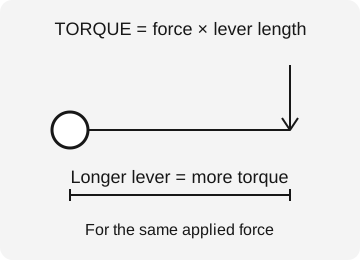
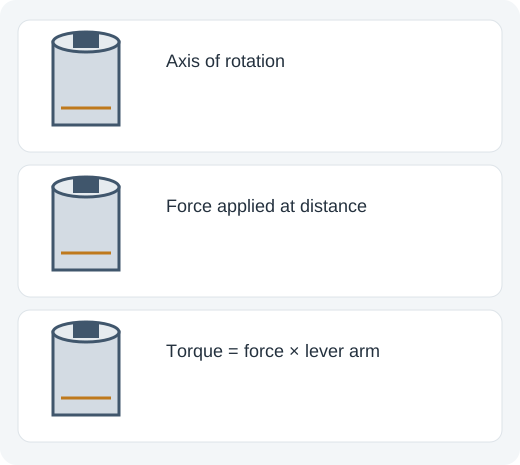
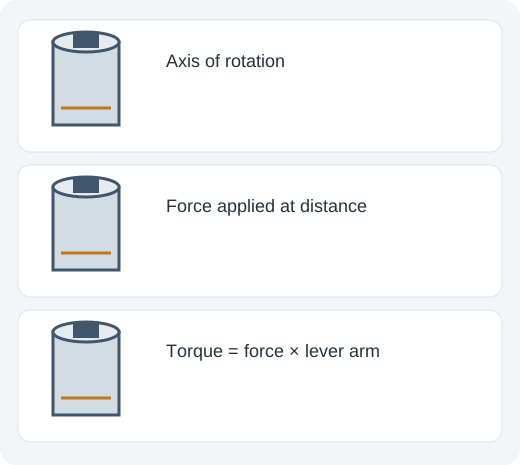
Torque describes the tendency of a force to rotate something around an axis. In a simple wrench setup, torque equals the force multiplied by its perpendicular distance from the turning axis. A longer handle gives more leverage for the same applied force.
Imagine pushing with 20 newtons perpendicular to a handle 0.25 m from the fastener axis. The ideal turning moment is 5 N·m. Push the same force at 0.5 m and it becomes 10 N·m. The example explains leverage; it does not tell you what any particular bolt should be tightened to.
The joint specification determines tightening requirements. Fastener size, grade, thread condition, lubrication, washers and assembly materials all influence the result. Do not infer required torque from the socket size alone.
UNITS AND CONVERSIONS
Common units are newton-meters, pound-feet and pound-inches. Pound-feet and pound-inches differ by a factor of twelve. Confusing them can produce a major error, especially on small fasteners.
One pound-foot is approximately 1.356 N·m; one pound-inch is approximately 0.113 N·m. Use enough precision for the application and the instrument, and confirm the unit printed on both the specification and tool. A scale marked in·lbf is not the same as ft·lbf.
Torque values are not motor speed or energy capacity. N·m, RPM and Wh describe different quantities. A high torque headline does not automatically mean greater cutting speed, longer runtime or a more suitable fastening process.
FASTENING, BREAKAWAY AND TEST CONDITIONS
Fastening torque describes a tightening result under a stated test or use method. Breakaway or nut-busting claims describe loosening capability under another method. The two values cannot be assumed equal or directly converted into final installed torque.
Impact-tool headline values depend on test conditions, time, battery, fastener and joint. Two brands may use different methods. Compare task-relevant performance and the stated method rather than treating the largest number as a universal ranking.
An impact wrench can apply torque quickly and unevenly. Counting impacts or seconds is not a calibrated final-tightening method. Use the assembly’s prescribed procedure when a specified torque matters.
WHY IMPACT SOCKETS ARE DIFFERENT
Impact sockets are designed and rated for repeated dynamic impacts. Their material, heat treatment, geometry and wall dimensions are chosen for that operating environment. A hand socket is designed for a different intended use.
A common impact-socket material is chromium-molybdenum steel, while chromium-vanadium is common in many hand tools, but alloy names alone do not establish suitability. The manufacturer’s rating and complete design decide. Black finish is not proof of impact rating.
Cracks, distorted drive holes, chipped edges or excessive wear are reasons to remove a socket from use. A socket that still fits can still be damaged. Inspect accessories and wear appropriate eye protection for the operation.
THE COMPLETE ACCESSORY CHAIN
Socket, extension, joint and adapter must all suit the tool and load. A rated socket connected through an ordinary hand-use universal joint is not a complete impact-rated setup. The weakest suitable rating limits the arrangement.
Square-drive retention also matters. Friction rings, detent pins and other systems work with appropriate socket features. Confirm seating and retention before operating, particularly with heavy accessories or overhead work.
Use the shortest workable arrangement. Long stacks of adapters can reduce control and introduce additional weak points. Choose a direct compatible setup when possible, and follow the operating limits of any angular joint.
TORQUE WRENCHES AND FINAL TIGHTENING
A torque wrench is used within its stated range and accuracy conditions. Click, beam, dial and electronic designs provide different feedback. Read the instrument’s instructions for direction, grip location, storage and calibration.
A click is a signal to stop applying force, not an invitation to click repeatedly. Continued movement can over-tighten the fastener. Some joints use staged tightening or a torque-plus-angle procedure; follow the actual sequence rather than replacing it with one arbitrary torque value.
Adapters that change effective lever length can require correction. A straight coaxial socket extension is not the same as an in-line crowfoot. Use the torque-wrench and adapter instructions for orientation and any calculation.
FRICTION, LUBRICATION AND JOINT CONDITION
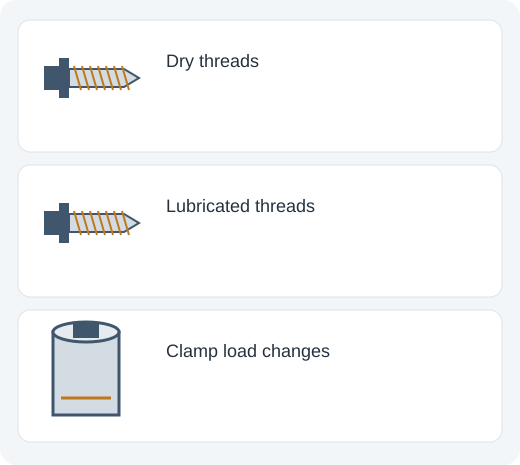
Most tightening work goes into overcoming friction, while a portion creates useful fastener preload. Changing lubrication or surface condition can change preload at the same torque. Never apply lubricant simply because a dry fastener feels difficult unless the installation procedure calls for it.
Dirty, damaged or cross-threaded fasteners can create high resistance before the joint is properly clamped. A torque value reached under those conditions may not mean the assembly is correct. Inspect threads, clean as specified and start fasteners by hand where appropriate.
Thread-locking compounds, locking nuts and washers have their own installation requirements. Treat them as part of the joint specification. A torque wrench cannot compensate for a wrong fastener grade or missing required component.
A PRACTICAL WORKFLOW
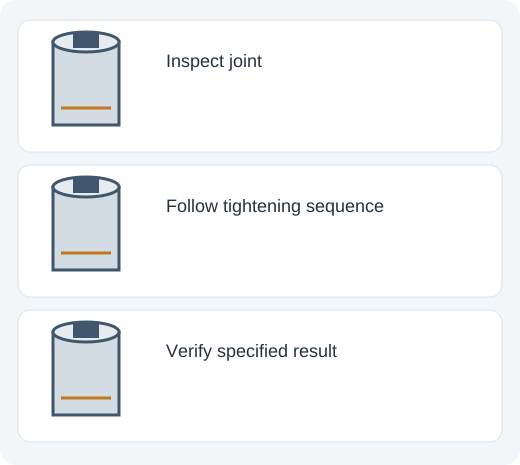
Identify the assembly specification and units. Select the correct socket size and profile. Use an appropriate loosening or running-down tool, avoiding damage and maintaining control. Then perform the specified final tightening with a suitable torque method.
For example, an impact wrench may help remove wheel fasteners, but reinstallation must follow the vehicle’s fastening and torque instructions. The example does not establish a universal wheel torque; different vehicles and fasteners have different requirements.
If the fastener feels abnormal, stop and investigate. A bolt that stretches, a thread that binds or a socket that slips is not fixed by selecting a higher impact setting.
FREQUENTLY ASKED QUESTIONS
Does socket size tell me safe torque? No. Drive size, socket design, fastener properties and the joint specification are separate. Can I use a black socket on any impact wrench? Only if it is actually rated for the tool and operation.
Can I use a torque wrench as a breaker bar? Follow its instructions; many instruments are not intended for general high-load loosening. Use a suitable breaker bar or other tool instead.
Is more torque better? Only enough to meet the specified installation requirement. Excess can strip threads, distort parts, damage bearings or break the fastener. Accurate appropriate torque is more useful than the greatest possible torque.
A NUMERICAL TORQUE EXAMPLE WITHOUT TURNING IT INTO A BOLT SPECIFICATION
Torque is force multiplied by perpendicular distance from the rotation axis. A perpendicular 100 N force acting at 0.20 m gives 20 N·m. At 0.40 m, the same force gives 40 N·m. This explains leverage; it does not specify how much torque a particular bolt, ratchet or socket can safely receive.
The word perpendicular matters. If the force is applied at an angle, only its perpendicular component creates the turning moment considered here. In real use, the tool geometry, hand position and attachment arrangement can change effective leverage. For torque measurement, follow the wrench instructions about where to apply force and how to use any offset attachment.
Keep units visible when comparing specifications. Pound-inch and pound-foot differ by a factor of twelve. A number without its unit is not a usable tightening instruction. Convert with a reliable calculation and retain appropriate precision; then verify that the target value came from the correct assembly specification rather than a generic table for a different joint.
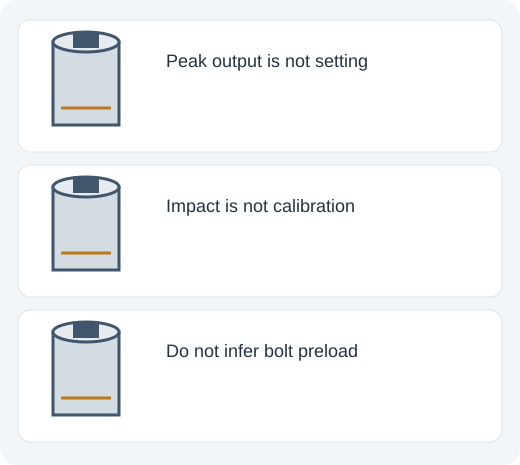
This simple force example is not a method for calibrating a torque wrench or assessing bolt preload by hand. The joint’s friction, lubrication, materials and tightening procedure affect the result. Where a joint is important, use the specified procedure, suitable measuring equipment and the correct fastener condition.
WHY AN IMPACT WRENCH NUMBER DOES NOT EQUAL FINAL JOINT TORQUE
An impact wrench produces repeated torque pulses. How much turning reaches the fastener depends on the tool, battery or air supply, socket, extension, joint stiffness, friction and duration. Advertised fastening or breakaway values are measured under a particular test arrangement. They are not fixed outputs delivered to every fastener whenever the trigger is pulled.
Breakaway claims concern loosening in a specified test and should not be read as calibrated tightening capability. A tool that can remove a highly tightened test fastener does not establish a safe installation setting for the same numerical torque. Similarly, a selectable drive mode may improve control without replacing a required torque-wrench verification.
Use impact-rated accessories and the joint procedure to decide whether powered rundown is appropriate. Avoid excessive initial tightening that a torque wrench cannot undo by merely checking the value afterward. If the procedure requires staged tightening, a sequence or angle steps, follow those requirements rather than reducing everything to one maximum tool rating.
Inspect the completed assembly as required and keep a record where the job calls for one. Correct torque is one part of a sound joint; damaged threads, wrong washers, incorrect fastener grade or unsuitable lubrication can still invalidate installation. A stronger wrench and a tougher socket cannot correct those underlying conditions.
VISUAL REFERENCE ATLAS
AT A GLANCE
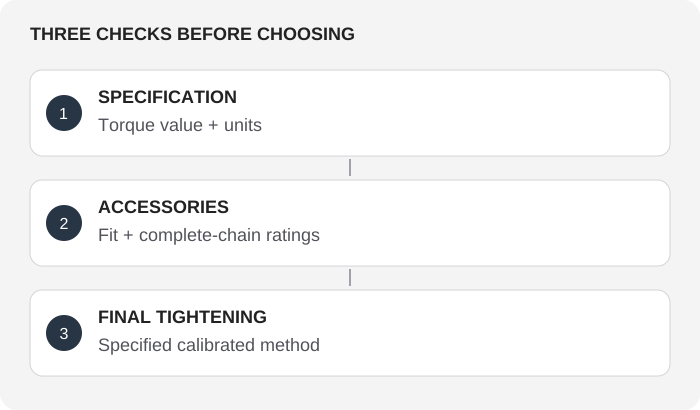
Illustrations explain the principle. They are not actual-size templates or precision fit drawings.
REFERENCES
General reference material. For an exact model, use its manufacturer’s specifications and instructions.
Torque wrenchSocket wrench