FASTENERS & DRIVES
HEX BITS AND ALLEN KEYS
The hex tip size and the bit holder size are separate measurements.
7 MIN READ
IN THIS GUIDE
HEX TIP VERSUS HEX SHANK
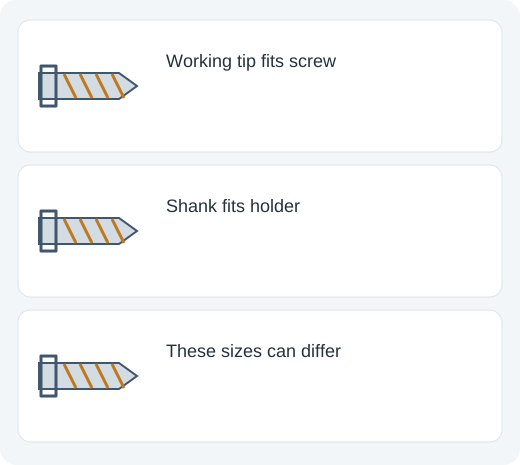
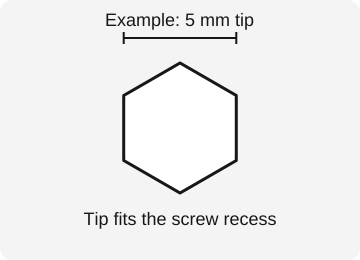
A hex tip engages a six-sided recess in a screw. A hex shank engages a tool holder. One bit can have a 5 mm working tip and a 1/4-inch hex shank. The two hexagons perform different jobs and do not have to be the same size.
An Allen key has a hexagonal working end without needing a separate holder. An L-shaped key provides two lever lengths and two access directions. A hex bit in a ratchet or screwdriver can improve reach or control, provided that the holder and load are appropriate.
Read the working size first. A package described only as “hex bits, 1/4 inch” may be describing the common shank rather than the screw size. Review the individual tip sizes in the set.
METRIC AND SAE SIZES
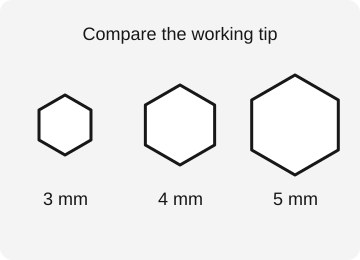
Metric hex keys are marked in millimeters across the flats of the working tip. SAE keys use inch fractions. One inch equals 25.4 mm, but a near conversion is not a reliable substitute for the specified size.
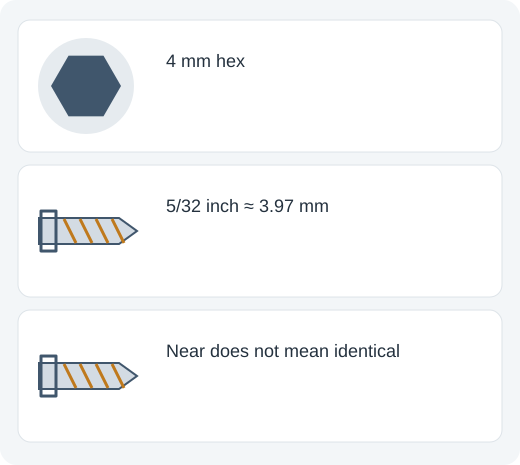
For example, 5/32 inch is 3.96875 mm, close to 4 mm but nominally different. Other pairs can be farther apart. Clearance, recess condition and load affect whether a wrong size seems to fit; apparent fit does not establish suitable engagement.
Use the correct size system for the fastener. When unknown, use the assembly documentation or measure carefully. A tool should engage the flats, not merely catch at the corners. On small screws, very little wear or size mismatch can produce substantial looseness.
STRAIGHT ENDS AND BALL ENDS
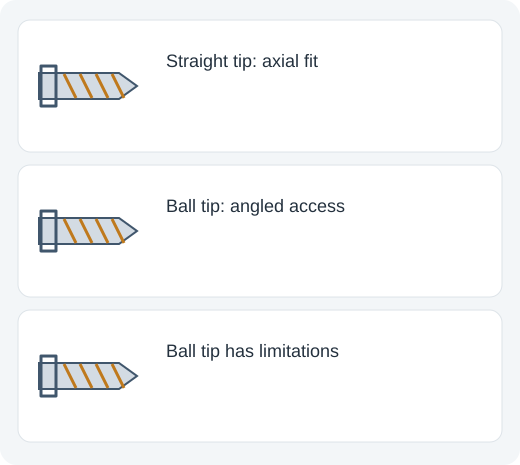
A straight hex end engages axially with the recess. It is generally the appropriate end for controlled high-load work within the tool and fastener ratings. Full seating matters because shallow engagement reduces the available contact area.
A ball end has a rounded working shape that allows access at an angle. It is useful when surrounding parts prevent a straight approach. Its permitted angle and load depend on the tool design; there is no universal angle or torque that applies to all ball-end keys.
Use a ball end for suitable access work, then switch to a straight end when the job calls for firm initial loosening or specified final tightening. A broken ball tip stuck inside a recess can make removal much harder.
LEVER LENGTH AND HANDLE CHOICE
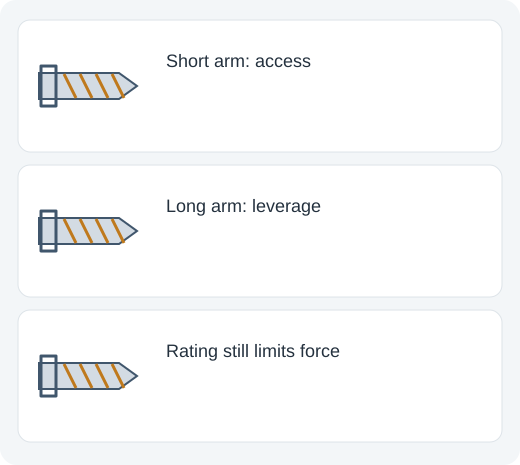
A longer handle gives more leverage. Torque equals applied force multiplied by perpendicular lever distance. Doubling that distance with the same force doubles the applied torque in an ideal simple setup, which can exceed a small screw’s limit.
An L-key can be used with its long or short arm as the handle, changing access and leverage. A T-handle can offer comfortable repeated turning. A folding set is portable but may have different clearance and leverage limitations from separate keys.
Do not extend a small key with an improvised pipe to overcome a fitting problem. First verify size, full seating, fastener condition and the appropriate loosening procedure. For specified torque, use a suitable torque tool with the required bit.
SECURITY HEX
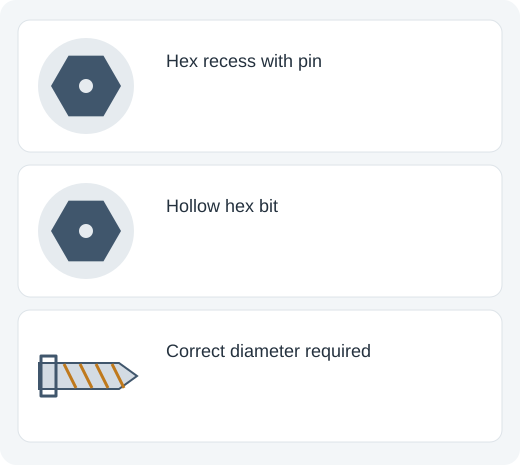
A security hex recess has a center pin. Its bit needs a matching central hole while retaining the correct hex size. The hole clears the pin; the hex faces transmit turning force.
A hollow Torx bit is not a security hex bit. A standard hex key that cannot seat because of the pin is not too long; it is the wrong security variant. Choose a complete match rather than forcing or modifying a regular key.
Hollow tips have different geometry from solid tips. Follow the product’s permitted load and use. A security feature does not imply that the fastener tolerates more torque or that a powered driver is appropriate.
HAND, SOCKET AND POWERED FORMATS
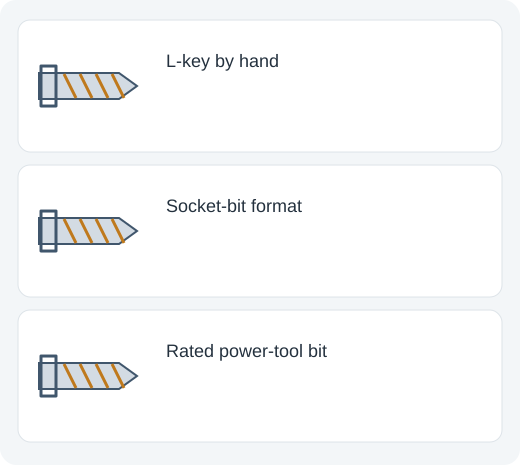
Hex tools appear as L-keys, screwdriver-style handles, insert bits, long power bits and socket bits. The working profile can be identical while the holder, reach and load rating differ.
Socket bits combine a square-drive socket body with a hex tip. Check both dimensions: the square drive must fit the wrench, while the tip must fit the screw. Adapters add another component with its own limits.
Use accessories rated for the intended powered application. A hand-use hex socket bit is not automatically impact-rated. Precision fasteners often benefit from manual control even when a powered tool could physically drive them.
PREVENTING ROUNDED RECESSES
Clean the recess so the tip can reach its full depth. Keep the tool aligned and use the correct size. Paint, dirt or an old broken tip can prevent seating and create the impression that the screw needs another size.
Inspect the key’s corners and flats. Worn, twisted or visibly rounded tools can damage otherwise usable fasteners. Replace the tool rather than grinding it into an improvised shape unless an appropriate repair procedure specifically calls for modification.
A screw that repeatedly loosens may have a joint, thread or installation problem. Tightening harder with a longer hex key can strip threads or break the screw. Use the specified fastener, tightening procedure and any required locking method.
A WORKED EXAMPLE
You need to tighten a recessed M6 socket-head screw. M6 describes the thread, not the hex key size. Look up the actual fastener specification or identify the recess size; head forms and standards can vary.
Choose a straight-ended tool of the specified Metric size. If access initially requires an angle, a suitable ball end may help run the screw down, but final torque should use the appropriate straight engagement and torque method.
If the recess includes a pin, use a matching security hex bit. If the tip feels loose or will not seat, stop before applying load and check size, debris and damage. These checks are faster than repairing a rounded screw afterward.
WHY NEARLY EQUAL HEX SIZES CAN FAIL
A hex recess transfers force through its flat contact surfaces. A tip that is undersized leaves more clearance and can contact nearer the corners as it turns. This increases the risk of rounding the recess. A tip that is oversized may not enter fully, so only a small portion of its length carries the load. Both situations can look acceptable before force is applied.
Metric and fractional-inch dimensions sometimes lie close together. For example, 5/32 inch equals 3.96875 mm, which is close to 4 mm but remains a different specified size. Normal manufacturing tolerances do not justify substituting one standard automatically. Use the size designated by the fastener or assembly, especially when the recess is small, damaged or used at significant torque.
Clean paint, packed dirt or thread-locking residue that prevents proper seating using an appropriate method. A partly obstructed recess can make the correct tool appear too large. For a critical joint, determine whether the fastener can be safely cleaned and reused; forcing the tip through contamination can damage both the recess and the tool.
With a straight tip, align the tool with the screw axis and seat it fully. A ball end is useful for reaching at an angle, but its smaller contact area and application-specific limits make it a poor automatic choice for initial loosening or final high-torque tightening. Use the manufacturer’s guidance for the allowed angle and torque.
COMPARING AN L-KEY, A BIT SOCKET AND A POWERED BIT
An L-key offers two working ends and different lever lengths. A bit socket connects a hex tip to a square-drive tool, including a suitable torque wrench. A powered bit connects to a driver through its shank. These formats solve different handling problems even when the nominal working tip is identical.
Choose the format by the required force, control, access and measurement. If a specified tightening torque must be measured, a correctly rated bit socket and suitable torque wrench may be appropriate. If access prevents that arrangement, consult the assembly procedure for an approved alternative. Adding a long improvised handle to an L-key does not create a documented torque capability.
Check the tip length, the body’s outside clearance and any security feature. A hollow security hex tip is needed for a matching center-pin recess; a solid tip of the same nominal size will be blocked. Conversely, the fact that a security tip clears a pin does not establish that it is the correct diameter or approved for the load.
For repeated work, store metric and SAE tools in separate labeled holders and inspect the most-used ends. A badly rounded tip should not remain in a set simply because its marking is readable. On expensive equipment, the cost of replacing a worn key is usually much smaller than repairing a rounded fastener or damaged assembly.
VISUAL REFERENCE ATLAS
AT A GLANCE
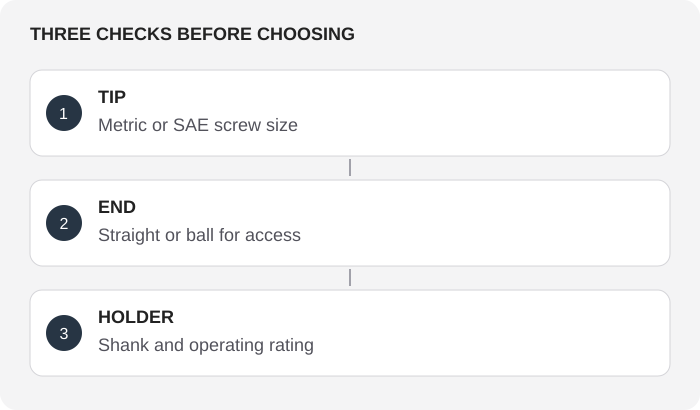
Illustrations explain the principle. They are not actual-size templates or precision fit drawings.
REFERENCES
General reference material. For an exact model, use its manufacturer’s specifications and instructions.
Hex key