POWER TOOLS BASICS
DRILL, IMPACT DRIVER OR ROTARY HAMMER?
Different tools deliver force in different directions.
8 MIN READ
IN THIS GUIDE
THREE DIFFERENT KINDS OF MOTION
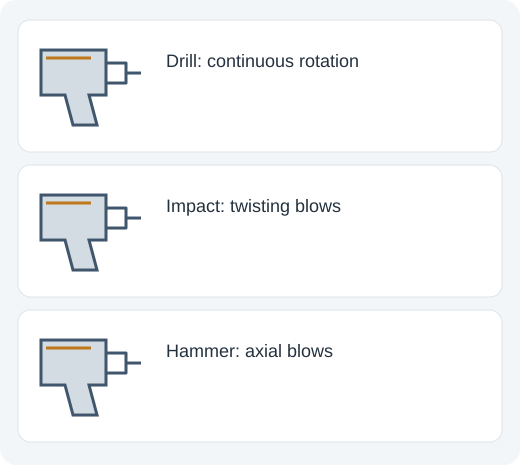
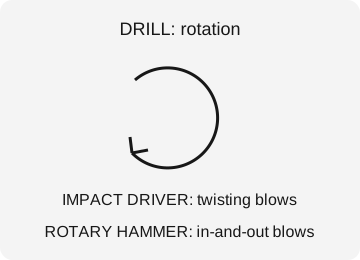
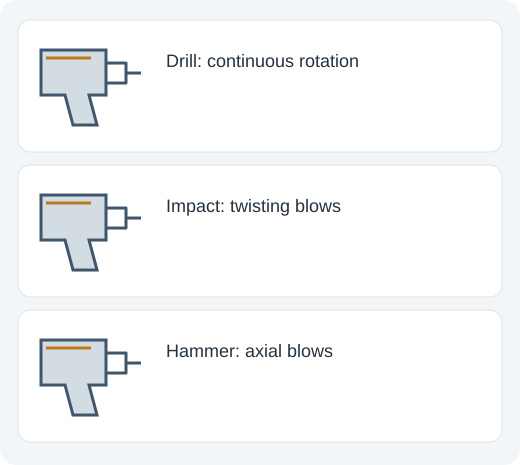
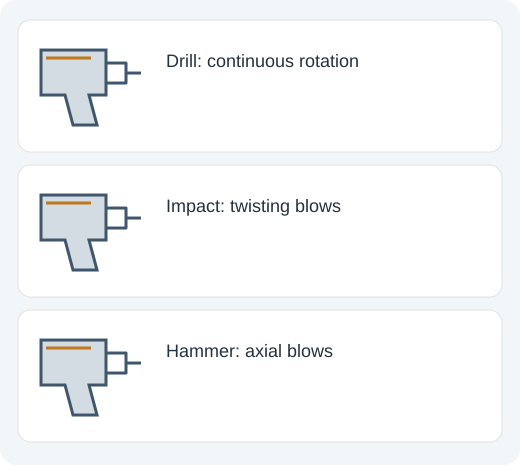
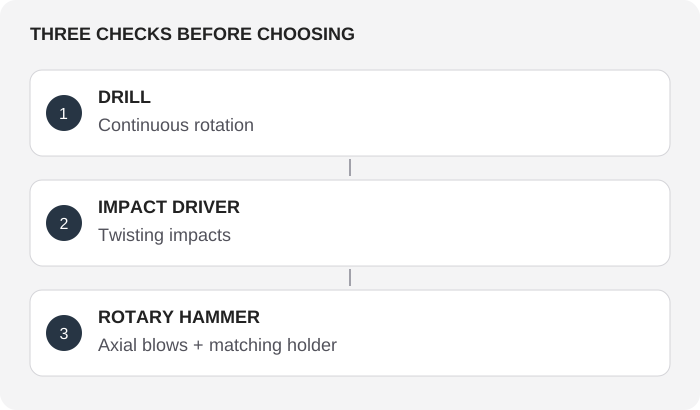
A drill mainly rotates the accessory. An impact driver adds repeated twisting blows. A hammer drill adds small axial blows along the drilling direction. A rotary hammer uses a different, stronger axial hammering mechanism with an appropriate holder. These are related tools, but their motions and typical jobs differ.
Tool names can be ambiguous. An impact drill in a seller’s wording might mean a hammer drill; an impact driver normally means a fastening tool with tangential impacts. Read the holder, operating modes and manufacturer’s description rather than relying on one translated word.
A useful starting point is the task: ordinary holes and controlled screw driving, demanding fastening, masonry drilling or heavier concrete work. The material, hole diameter and duty cycle determine the next step.
DRILL DRIVERS
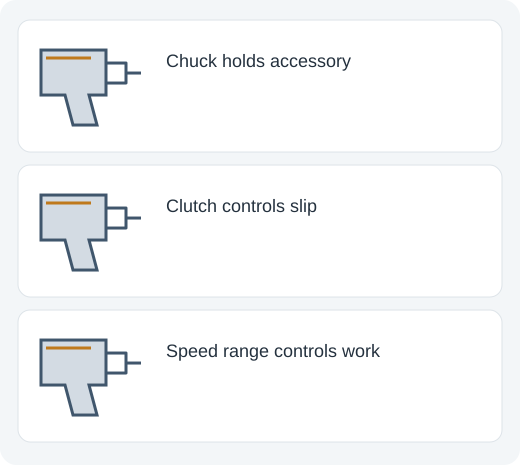
A drill driver uses continuous rotation and usually a three-jaw chuck. It can hold suitable drill bits and screwdriver-bit holders within its size range. Many models have two mechanical gears and an adjustable clutch for fastening.
Low gear normally provides lower speed and greater available torque; high gear suits lighter, faster drilling. The variable-speed trigger controls speed within the selected range. Use the bit manufacturer’s guidance for the material and diameter rather than always holding the trigger fully open.
The clutch limits fastening load in a tool-specific way. Numbered settings are not universal torque values across tools. A setting of 10 on one drill does not mean the same tightening torque on another. Use a calibrated torque method for assemblies with a specified requirement.
IMPACT DRIVERS
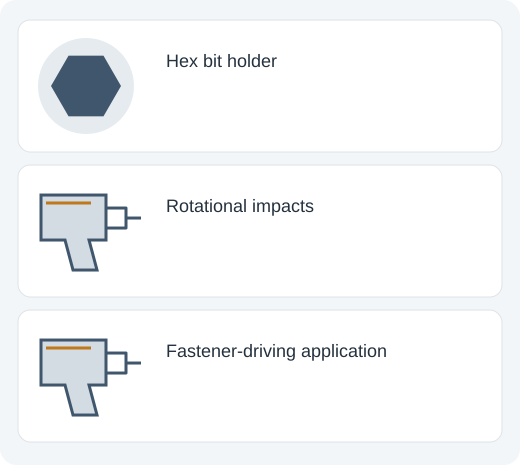
An impact driver normally has a quick-change hex holder and a mechanism that delivers repeated tangential blows. It is useful for suitable screws and bolts, especially when continuous rotation alone would require substantial reaction torque from the user.
Its behavior is not the same as a drill clutch. Impacts can continue applying load quickly, and a small screw can be overdriven or broken. Use an appropriate mode, trigger control and accessory. A correct screw bit must still seat fully and match the profile.
An impact driver can use certain drilling accessories with compatible shanks, but that does not make it the best tool for every hole. Precision, runout, bit rating and material suitability matter. Dedicated drills are often more suitable for controlled drilling with ordinary bits.
IMPACT WRENCHES
An impact wrench commonly uses a square drive for sockets. It is intended for suitable nuts and bolts rather than simply being a larger screwdriver. Square-drive size, fastening torque, breakaway claims and control modes vary by model.
Use impact-rated sockets and accessory chains. A chrome hand socket with the right square drive is not automatically suitable. Check retention, inspect for cracks and use the tool’s intended operating procedure.
Impact tightening does not replace a specified final torque procedure. Where a fastener requires controlled torque, complete the installation with the appropriate calibrated method. Do not judge torque from noise, number of impacts or a headline maximum rating.
HAMMER DRILLS
A conventional hammer drill adds axial percussion while rotating. Many retain a three-jaw chuck and allow hammer mode to be switched off. They can be useful for suitable smaller masonry holes while also performing ordinary drilling in other modes.
Use a masonry bit designed for the material and tool. Wood and metal drilling normally use rotation-only mode unless a specific accessory and method require otherwise. Screw driving is not done by leaving masonry hammer mode on.
A hammer drill’s capacity depends on its design, material and accessory. Dense concrete and repeated larger holes can be a reason to choose a rotary hammer. The word hammer alone is not a guarantee of equal performance.
ROTARY HAMMERS AND CHISELING
A rotary hammer uses a dedicated axial hammering mechanism, commonly with SDS-plus or SDS-max accessories. It is generally used for appropriate concrete and masonry drilling and, on models that support it, chiseling.
The bit is retained while allowed to move axially in the holder. SDS-plus and SDS-max are different interfaces. A rotary hammer’s drilling diameter, impact energy, modes and weight must suit the job; a larger tool can be unnecessary and tiring for small overhead work.
Hammer-only mode is for compatible chisels where supported. Not every rotary hammer has that mode. Match the chisel interface and permitted operation, and distinguish positioning the chisel from actually running the hammer.
SELECTING THE TOOL STEP BY STEP
For cabinet screws and general controlled drilling, start with a suitable drill driver. For repeated suitable structural screws, an impact driver may improve efficiency, but follow the fastener’s installation requirements and use rated bits.
For small masonry holes, compare the base material and drilling frequency with a suitable hammer drill’s capacity. For demanding concrete holes or repeated anchor installation, compare a suitable rotary hammer. Use the anchor’s required hole diameter, depth and cleaning procedure.
For nuts and bolts, determine whether a manual wrench, impact wrench or torque tool is needed at each stage. Initial loosening, running a fastener down and final torque are different operations and need not use the same tool.
CONTROL, DUST AND WORKPIECE SUPPORT
Clamp the workpiece where appropriate and anticipate a drill bit catching. A side handle and any anti-kickback function must be used as the tool instructions require. Do not rely on an electronic feature to remove the need for good support and grip.
Masonry drilling can produce respirable silica dust. Use suitable extraction and protective measures for the work. Metal swarf and broken fasteners can also be hazardous; keep eyes and hands clear and disconnect power before changing accessories.
Noise and vibration differ by tool and task. Repeated impact work can require hearing and other protection. Choose a setup that completes the work without repeatedly overloading, stalling or forcing an unsuitable accessory.
COMMON QUESTIONS AND MISLEADING SHORTCUTS
Can one combination drill do everything? It can cover several jobs within its capacity, but it does not become an impact driver or SDS rotary hammer merely by adding a mode. Can a rotary hammer drive screws? Only use functions and accessories intended by its instructions; it is generally not a substitute for a controlled fastening tool.
Does higher advertised torque always mean a better tool? No. Test method, speed under load, control, weight and access matter. Breakaway and fastening torque are not interchangeable ratings.
Can I fit a socket adapter to an impact driver? Sometimes with a suitable rated adapter, but the adapter and driver limits still apply. It does not create the capacity of a dedicated impact wrench.
Choose from the required operation, material, interface and capacity. The correct tool is the one that safely completes that work with appropriate control, not simply the one with the largest number on its box.
WORKING THROUGH WOOD, METAL AND CONCRETE EXAMPLES
For a controlled hole in wood, choose a drill and a wood-cutting bit appropriate to the required diameter and finish. Support the work and consider exit-side tear-out. A drill’s continuous rotation and adjustable speed give control that differs from an impact driver’s twisting blows. Some impact-rated drilling accessories exist, but their approval is specific rather than universal.
For a hole in metal, begin with a metal-rated bit and a suitable speed and feed for its diameter and the workpiece. Clamp the material securely; a thin sheet can catch or spin if held loosely. Hammer action is not a substitute for a sharp cutter and controlled metal-drilling technique. The holder and cutting geometry must both suit the operation.
For concrete, identify whether a hammer drill or rotary hammer and the specified bit are appropriate to the hole and substrate. A rotary hammer’s SDS system differs from a conventional chuck and hammer-drill mechanism. Dust control, anchor-hole preparation and local substrate conditions matter as much as the tool’s ability to make the bit rotate.
For driving a fastener, identify its head profile, required installation procedure and final torque needs. An impact driver can be effective for certain screws, while an impact wrench uses a square-drive socket system. Neither tool should be assumed to deliver a specified final tightening torque merely because its maximum output exceeds the target.
INTERPRETING MODES AND PERFORMANCE CLAIMS
Read the tool’s actual mode controls: rotation only, hammer drilling, chiseling, clutch-controlled driving or selectable impact settings. Tools sharing a broad category can offer different combinations. A rotary hammer with rotation and hammer modes may not include a chisel-only mode. A hammer-drill label does not establish compatibility with an SDS accessory.
Compare capacity statements within the same material and test context. Maximum drilling diameter in wood, steel and concrete describes different tasks. A large headline torque value is not a promise that the tool can safely drill any diameter that fits its chuck. Chuck capacity, recommended applications, speed ranges and handling requirements remain relevant.
For difficult work, review support and reaction control. A large drill can rotate the tool body if a bit binds. Auxiliary handles, clutch behavior or electronic protection should be used as instructed, not treated as excuses to ignore workpiece support. Appropriate technique and a suitable cutting accessory reduce overload before protective systems are needed.
If performance disappoints, inspect the combination rather than immediately upgrading the tool. A worn bit, incorrect operating mode, poor chip evacuation or unsuitable battery can each change the result. Match the cutter, material, operating setting and tool class first; then evaluate whether the application needs a different machine.
VISUAL REFERENCE ATLAS
AT A GLANCE
Illustrations explain the principle. They are not actual-size templates or precision fit drawings.
REFERENCES
General reference material. For an exact model, use its manufacturer’s specifications and instructions.
Hammer drillImpact driverRotary hammer