POWER TOOLS BASICS
BATTERY VOLTAGE, AH AND WH
Capacity numbers are not a compatibility guarantee.
8 MIN READ
IN THIS GUIDE
VOLTAGE, CURRENT, CAPACITY AND ENERGY
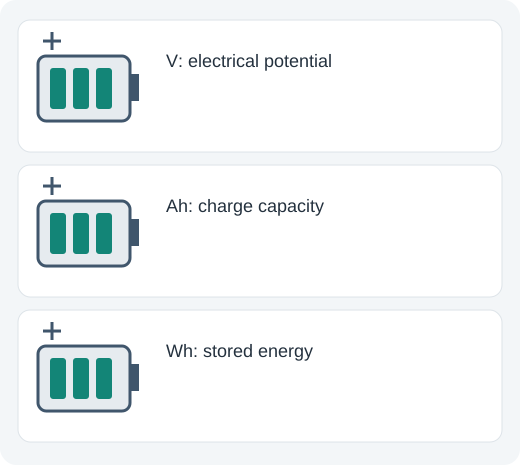
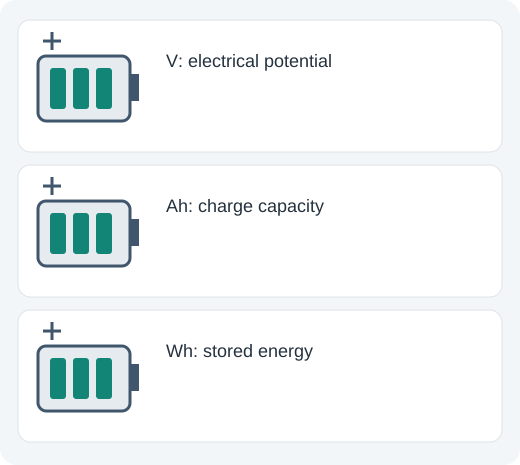
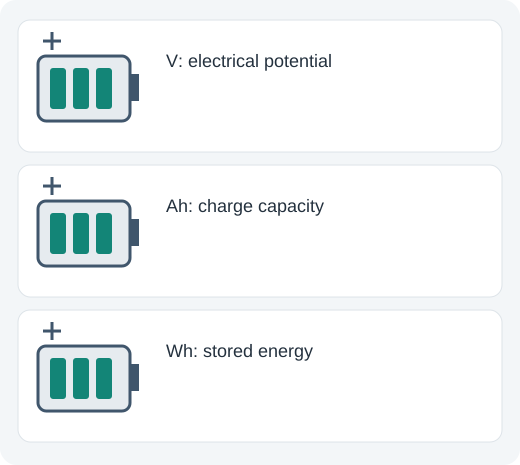
Voltage is the electrical potential difference. Current is the flow of electrical charge. Amp-hours describe charge capacity under stated conditions. Watt-hours describe stored energy. These quantities are related but answer different questions.
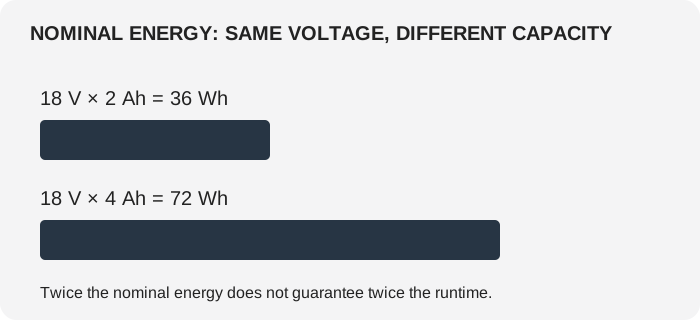
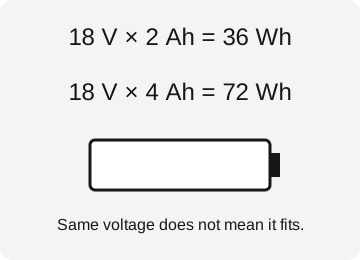
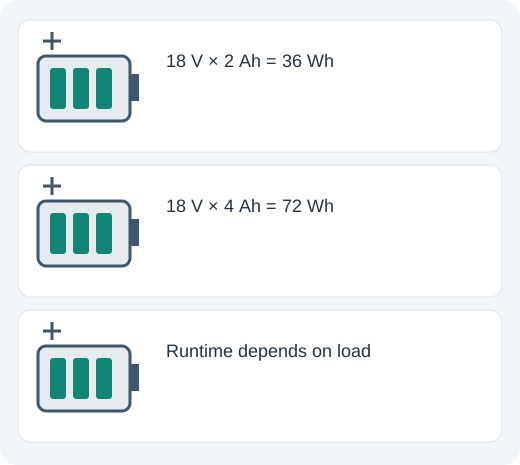
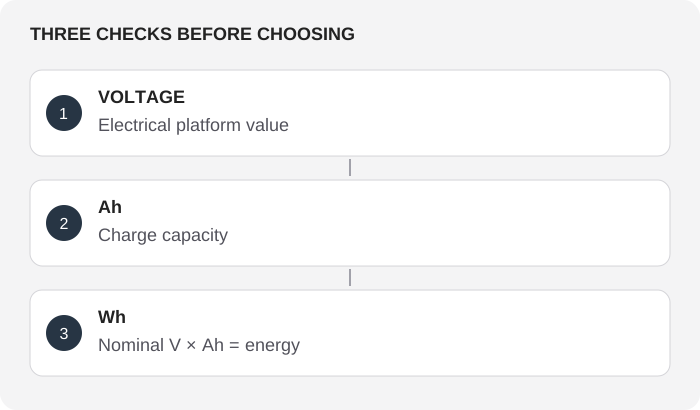
A useful approximate energy calculation is nominal voltage multiplied by amp-hours. An 18 V, 2 Ah pack has about 36 Wh nominal energy; an 18 V, 4 Ah pack about 72 Wh. The second stores roughly twice the nominal energy, but that does not guarantee exactly twice the runtime in every task.
Runtime depends on the load and system. If average input power were a constant 72 W, an ideal 72 Wh source would supply it for about one hour. Real tools have varying loads, losses, temperature limits and battery cutoff behavior, so the calculation is a planning model rather than a runtime promise.
NOMINAL AND MAXIMUM VOLTAGE LABELS
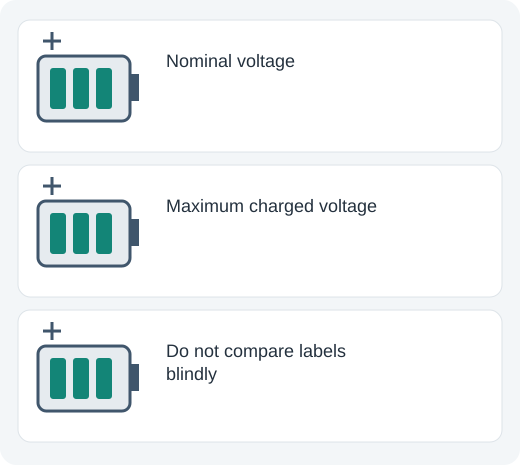
A lithium-ion cell’s voltage changes with charge state. Nominal voltage describes a representative operating value; maximum or fully charged voltage is higher. A pack made from the same cell arrangement can therefore be marketed with different kinds of voltage labels.
For example, some tool platforms use 18 V nominal and others advertise 20 V maximum for a similar five-series-cell class. This explains a labeling distinction; it does not establish brand compatibility or equal performance between packs.
Read whether the label is nominal, maximum or another designation. Compare tool capacity and platform specifications rather than assuming a higher marketing number always means greater useful power.
SERIES AND PARALLEL CONNECTIONS
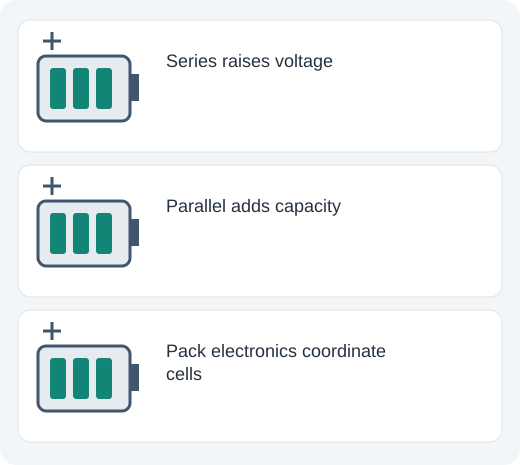
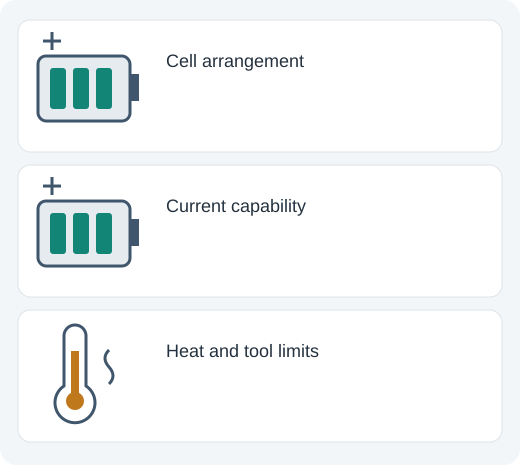
Cells connected in series add voltage. Cells connected in parallel can add charge capacity and current capability within a properly designed pack. Cell chemistry, arrangement, electronics and thermal design all matter.
Two packs with the same voltage and Ah can use different cells or layouts. Their ability to deliver current and manage heat can differ. A capacity marking is not a complete output-power rating.
Do not modify or rebuild a tool battery as a routine way to change its specification. Packs contain safety-critical cells, interconnections, monitoring and protection. Use compatible manufacturer-approved packs and servicing methods.
WHY LARGER PACKS CAN CHANGE PERFORMANCE
A larger compatible pack may provide more energy and, in some systems, better sustained current delivery. That can affect performance on high-load tools. It can also add weight and size that make a compact drill less convenient.
The exact result depends on the tool and pack design. A small pack may be physically compatible but not provide the same performance as a pack recommended for demanding work. Some tools specify particular packs for full output or operation.
Choose pack size for the job: access and overhead handling may favor a smaller pack; sustained cutting or grinding may favor a larger suitable one. The largest available pack is not automatically the best choice for every tool.
PLATFORM COMPATIBILITY
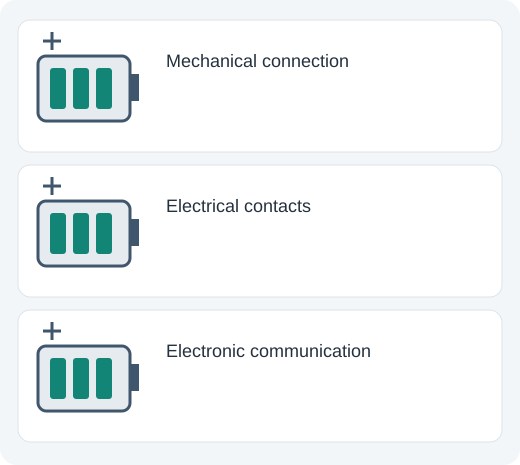
Voltage alone does not establish compatibility. Physical interface, contacts, communication, current limits, chemistry and thermal protections are part of the system. Packs from different brands are not interchangeable merely because both say 18 V.
Within one brand, different platforms can also be incompatible. Compact 12 V, 18 V and higher-voltage systems can have different holders and electronics. A storage platform such as PACKOUT or MODbox is not a battery platform.
Use the exact tool and charger compatibility information. Third-party adapters can change or omit protections; a mechanical fit is not proof that the combination is electrically or thermally appropriate.
CHARGING AND TEMPERATURE
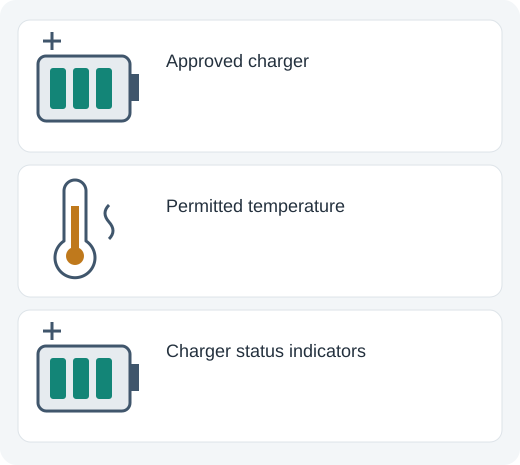
Use the charger intended for the pack and follow its permitted temperature range. Charging time depends on pack capacity, charger output, state of charge and thermal conditions. A fast-charger label does not mean every pack reaches full charge in the same time.
A hot pack may wait before charging or a cold pack may be outside the permitted range. That delay can be protective behavior rather than a fault. Let the pack reach the conditions described in its instructions instead of trying to force charging.
Keep contacts clean and inspect the pack and charger for damage. Do not use a swollen, cracked, leaking or unusually hot battery. Follow manufacturer and local guidance for handling and disposal of damaged packs.
CARE, STORAGE AND AGING
Battery performance changes with time, use and temperature. Heat and unsuitable storage conditions can accelerate deterioration. Avoid leaving packs in environments outside their specified limits, such as excessive heat in a vehicle.
For longer storage, follow the manufacturer’s state-of-charge and temperature recommendations. Do not invent a universal storage percentage for every chemistry and product. Check packs periodically as instructed.
A lower runtime can come from aging cells, colder conditions, a more demanding accessory or another tool problem. Compare the same task under similar conditions before concluding that capacity has suddenly disappeared.
CHOOSING A KIT OR BARE TOOL
A bare tool requires a suitable existing battery and charger. A kit may include one or more packs, but their capacity and type can differ from what the tool’s promotional demonstration used. Read the contents carefully.
Total platform cost includes batteries, chargers and the tools you plan to use. A cheaper bare tool can be more expensive overall if it starts a separate platform. On the other hand, a suitable specialized tool can justify a new platform for a particular job.
For mobile work, consider charging access and duty cycle. Two appropriately sized packs may provide a smoother workflow than one very large pack, but the correct arrangement depends on how quickly the tool uses energy and how quickly compatible charging restores it.
COMMON QUESTIONS AND WORKED COMPARISON
Is 5 Ah always stronger than 2 Ah? It generally indicates more charge capacity within comparable conditions, but output capability also depends on cells and design. Is 20 V always better than 18 V? Not when the labels use maximum versus nominal voltage for comparable classes.
Compare an 18 V, 2 Ah pack at about 36 Wh and an 18 V, 5 Ah pack at about 90 Wh. The larger pack stores about 2.5 times the nominal energy. Real runtime still depends on the same load, losses and permitted operation.
Can two equal-Wh packs replace each other? No. Energy equality does not establish voltage, interface, chemistry or platform compatibility. Use Wh to understand energy; use the actual compatibility specification to decide fit.
COMPARING PACKS WITH A TRANSPARENT ENERGY CALCULATION
A nominal 18 V, 2 Ah pack represents about 36 Wh of nominal energy; a nominal 18 V, 4 Ah pack represents about 72 Wh. Multiplication makes the energy comparison explicit. Use nominal voltage consistently: multiplying a maximum charged voltage label by capacity while comparing it with another pack’s nominal rating can distort the comparison.
If a task drew a constant average 100 W from an ideal usable 36 Wh supply, dividing energy by power would give 0.36 hours. This is an illustrative calculation, not a runtime promise. Real usable capacity, changing load, losses, temperature and protective cutoffs make actual runtime different. Power tools rarely operate at one constant load throughout a job.
A larger compatible pack can also affect the current available to the tool, depending on cell design and arrangement. That can change performance on demanding applications. Capacity alone does not prove current capability: two packs with the same Ah label may use different cells, electronics and thermal design.
Include weight and balance in the decision. More energy can reduce charging interruptions while making a compact drill harder to use overhead. For all-day work, two manageable compatible packs and an approved charger can be more useful than one very heavy pack. Check actual tool and pack recommendations rather than assuming the largest pack is automatically optimal.
COMPATIBILITY IS MECHANICAL, ELECTRICAL AND ELECTRONIC
First confirm the manufacturer’s approved platform. The mounting rails or insertion shape must match, the contacts must provide the intended electrical connection, and any electronic communication or protective functions must work as designed. A similar voltage label answers none of these fit questions by itself.
Then check any tool-specific restrictions. Some platforms support many tools, while particular tools may specify recommended pack types or combinations for their operating demands. Batteries from another brand, homemade adapters and altered contacts are not made compatible merely by reaching the same nominal voltage.
Use the charger approved for the pack family and follow its temperature and status guidance. A charging delay can reflect temperature protection rather than a failed pack. Do not charge a visibly damaged, leaking or unusually hot battery; follow the manufacturer’s service and disposal instructions. Replace damaged parts through the supported process.
For buying a kit, compare the included exact pack models, capacities and charger, not just the number of batteries. A bare tool can be sensible when compatible packs are already available; a kit can be useful when building a new platform. Keep platform compatibility, energy capacity and tool performance as separate entries in the comparison.
VISUAL REFERENCE ATLAS
AT A GLANCE
Illustrations explain the principle. They are not actual-size templates or precision fit drawings.
REFERENCES
General reference material. For an exact model, use its manufacturer’s specifications and instructions.
Lithium-ion battery