DRILLING & FASTENING
BIT SHANKS AND HOLDERS
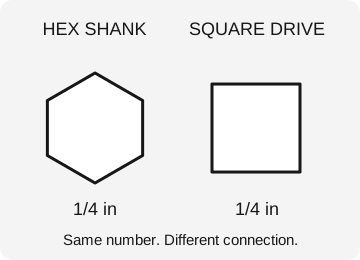
A 1/4-inch hex shank is not a 1/4-inch socket drive.
7 MIN READ
IN THIS GUIDE
THE WORKING TIP AND THE HOLDER END
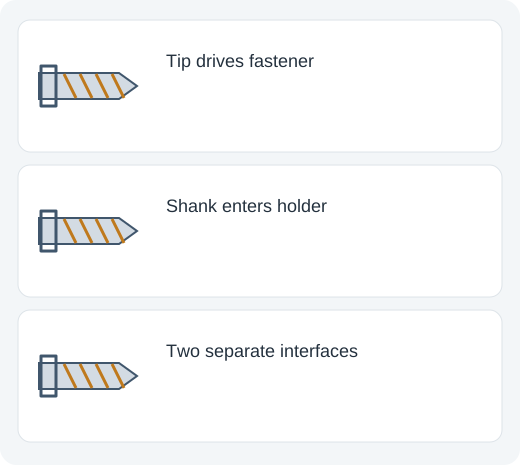
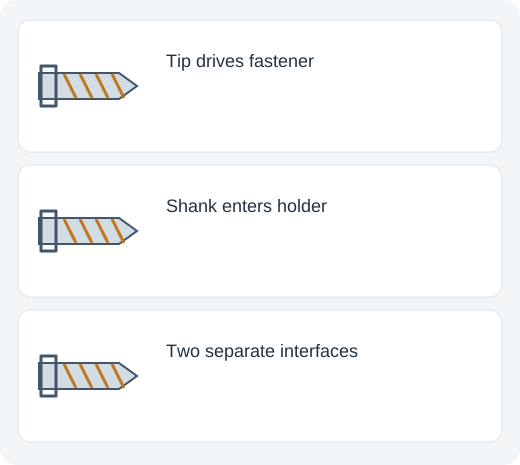
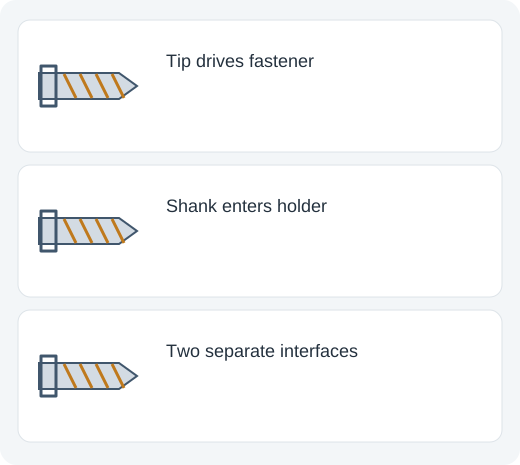
A bit has two interfaces. Its working tip engages a screw; its shank engages a holder. The tip might be PH2, T25 or 4 mm hex while the shank is a common hex format. Changing the shank holder does not change which screw the tip fits.
A 1/4-inch hex shank has six sides. A 1/4-inch square drive has four sides and belongs to a socket system. Their nominal fraction is the same, but their shapes and retention are different. They do not connect directly.
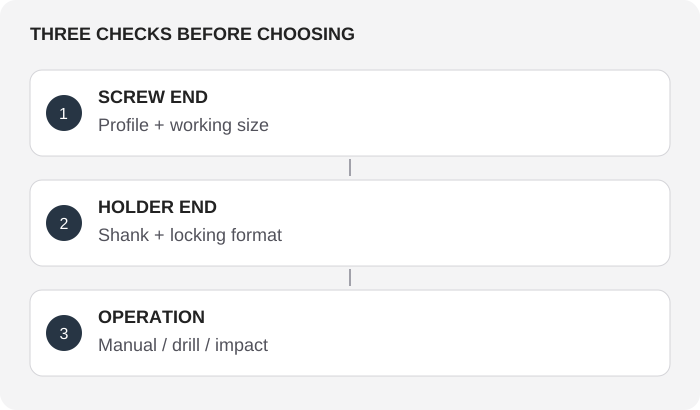
Before buying, check tip profile and size, shank format, length, retention geometry and permitted operating use. “Fits a drill” is not a complete specification for an impact-driver holder or precision hand driver.
SHORT INSERT BITS AND POWER BITS
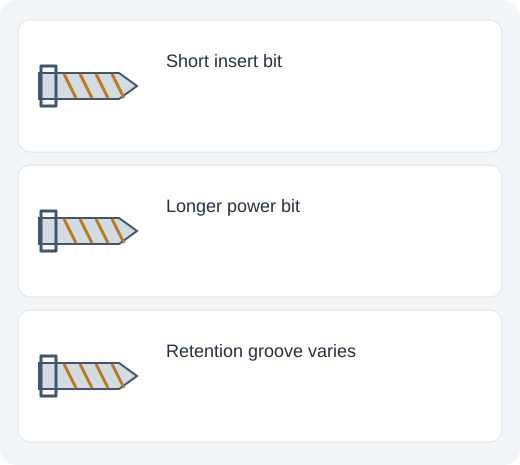
Short insert bits are commonly used with a separate bit holder. Longer power bits are made in formats suited to specific direct holders. Retention grooves and shank geometry matter; two bits with hexagonal bodies can have different intended retention methods.
Some quarter-inch bit formats are standardized, but the exact form still matters. A compact insert bit may not lock directly into an impact driver’s quick-change holder. Use a compatible holder instead of assuming that any hex shank must latch.
A longer bit improves reach and can make it easier to see alignment, but can also flex more and allow more wobble. Use enough length for access without unnecessarily increasing the distance between your hand and the fastener.
MAGNETIC, MECHANICAL AND LOCKING RETENTION
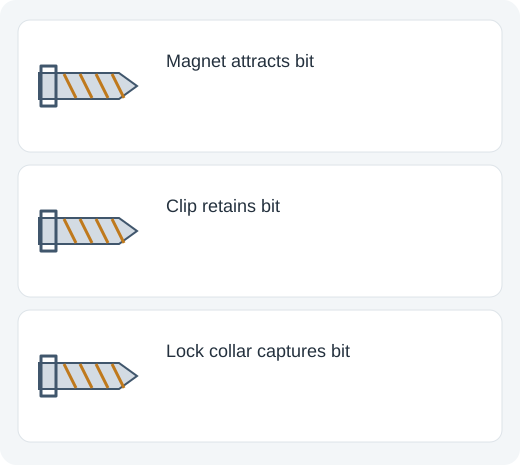
Magnetic holders help keep ferromagnetic bits or screws in place, depending on the design. A magnet is not the same as a mechanical lock. A screw can fall if its material or contact area does not cooperate with the magnet.
Quick-change holders may use a collar and locking mechanism. Confirm that the bit locks and releases as intended. Some designs require pulling the collar to insert; others allow push-in insertion. Follow the model instructions rather than forcing an unfamiliar mechanism.
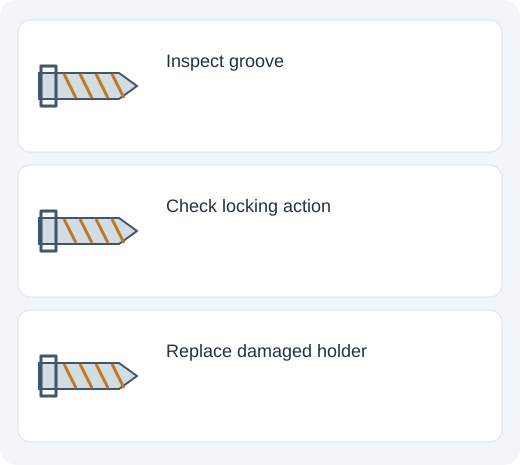
A damaged retaining groove, worn lock or packed debris can make a holder unreliable. Inspect engagement before work, especially overhead. The holder should retain the bit while allowing the release method its design requires.
DRILL CHUCKS AND IMPACT-DRIVER HOLDERS
A drill’s three-jaw chuck can grip suitable round or hex shanks within its size range. It is a clamping device. An impact driver normally has a quick-change hex holder with a different retention mechanism.
A drill can drive screws when fitted with an appropriate bit or holder and settings. An impact driver adds tangential impacts and has different load behavior. A bit that is suitable for a manual screwdriver is not automatically suitable for those repeated impacts.
Hammer-drill axial percussion is another mechanism. Do not use screwdriver bits in hammer-drilling mode merely because they fit the chuck. Choose the appropriate tool mode for fastening.
IMPACT-RATED BITS AND COMPLETE ACCESSORY CHAINS
For impact use, every component must suit that operation: bit, holder, extension, adapter and any socket. The correct tip shape is only one requirement. A non-rated holder remains a weak link even if the bit is impact-rated.
Impact-rated designs can use different steel, heat treatment and torsion geometry. Color, surface coating or a narrow waist alone does not prove rating. Read the manufacturer’s stated intended use.
A hex-to-square adapter can let an impact driver turn suitable sockets, within its limits. It does not turn the driver into a dedicated impact wrench or increase the adapter’s capacity. Avoid long chains of adapters and joints where a direct appropriate tool would provide better control.
EXTENSIONS AND ACCESS
A bit extension increases reach. A slim extension can fit a recessed area, while a bulky quick-change collar may not. Check outside diameter and actual usable length, not only the overall extension length.
Flexible shafts and angle attachments can reach otherwise inaccessible screws but have their own speed, torque and direction limits. Their suitability is not established by a matching input hex. Follow their operating instructions and keep moving parts clear.
Magnetic screw sleeves and screw-holding attachments are useful only when they fit the screw and bit format. A sleeve that prevents full tip seating can damage the recess. Check engagement before driving.
PRACTICAL SELECTION EXAMPLE
Suppose you need to drive PZ2 screws inside a narrow cabinet. Choose a PZ2 tip, enough reach and a holder that can fit the opening. If using a drill, select an appropriate clutch setting and speed. If using an impact driver, choose a locking shank format and impact-rated components.
Now suppose the same screw is inside a narrow electronics housing. A bulky quarter-inch holder may not reach it even though the tip size is correct. A suitable precision or long-shaft manual tool may be the better choice.
If the bit falls out, check the retention format and holder condition before applying tape or other improvised fixes. A short insert bit may simply require the holder it was intended to use.
CARE AND TROUBLESHOOTING
Disconnect power before changing or inspecting accessories. Clean chips from the holder and check that collars move freely. Follow the model instructions for cleaning and lubrication rather than flooding a holder with oil.
Replace bits with damaged tips or shanks. A bent extension can cause runout and make accurate engagement difficult. Visible wobble may come from the bit, holder, extension or chuck; check the components separately.
Do not hold the rotating bit or holder to steady it. Use controlled speed, full engagement and appropriate workpiece support. If an accessory slips or repeatedly releases, stop and resolve the fit or retention problem before continuing.
CHECKING EVERY CONNECTION BEFORE POWERED USE
Start at the tool’s output and work toward the fastener. Identify whether the tool has a three-jaw chuck, a hex quick-release holder or another interface. Check the bit or accessory shank, then any holder, adapter and extension between them. Finally check the working tip against the fastener. Each connection answers a different fit question.
A nominal quarter-inch hex connection describes the shank’s across-flat size, not a guarantee that every retention groove and bit length will work in every holder. Short insert bits, longer power bits and specialty accessories can differ in retention features. Confirm which formats the holder is designed to retain. A magnet holding a loose bit is different from a mechanical locking mechanism.
For impact-driver use, confirm that all parts of the accessory chain are intended for that operating mode. A bit rated for impact does not upgrade an unapproved extension or a hand-tool adapter. A square-drive adapter also does not turn an impact driver into a torque-measuring instrument, and its rating must suit the intended application.
With the tool isolated according to its instructions, install and check retention. Inspect the bit’s working end for wear and the shank for damage that interferes with the holder. Before applying force, verify alignment and seating at the fastener. An assembly that is secure at the tool can still damage a screw if its working tip is wrong.
SOLVING A RECESSED FASTENER WITHOUT CREATING A FLEXIBLE CHAIN
Measure or estimate the distance from the opening to the fastener and the width of the access path. A long narrow bit may solve the problem more directly than several short extensions. A bulky holder can stop at the opening even when the tip itself would fit. Check clearance for the entire accessory, not only the tip diameter.
Use the shortest suitable arrangement that provides working access and visibility. Greater reach can add bending, wobble and alignment difficulty. Avoid side-loading the bit against the access opening. If the tool cannot be aligned reasonably with the fastener, a different tool format or approved right-angle attachment may be needed.
A magnetic screw holder can help present a steel fastener, but magnetism is not a guarantee of bit retention or correct seating. Some fasteners do not respond strongly to a magnet. Mechanical guides, screw sleeves and locking holders each have specific operating limits; read their instructions rather than treating them as equivalent accessories.
After the job, remove packed debris from the holder using the specified method and inspect release mechanisms. Lubricating a mechanism indiscriminately can attract dust or damage materials. Replace worn parts when the manufacturer’s service guidance indicates; repeatedly forcing a sticking holder can damage the retaining feature.
VISUAL REFERENCE ATLAS
AT A GLANCE
Illustrations explain the principle. They are not actual-size templates or precision fit drawings.
REFERENCES
General reference material. For an exact model, use its manufacturer’s specifications and instructions.
ScrewdriverSocket wrench