MATERIALS & METALLURGY
TOOL MATERIALS, HARDENING AND COATINGS
Understand hardness, toughness and heat resistance. Compare HSS, cobalt alloys, carbide, hand-tool steels and coatings by application.
10 MIN READ
IN THIS GUIDE
THERE IS NO SINGLE STRONGEST TOOL MATERIAL
A tool material is chosen for a particular failure mode. A drill edge needs resistance to wear and heat. An impact socket needs toughness under repeated blows. A knife needs an appropriate combination of edge retention and resistance to chipping. A material that excels in one condition can be unsuitable in another.
The word load can mean steady force, bending, repeated impact, abrasion or temperature. Before ranking materials, identify which load matters and what would make the tool fail. Hardness alone is not a complete strength or durability rating.
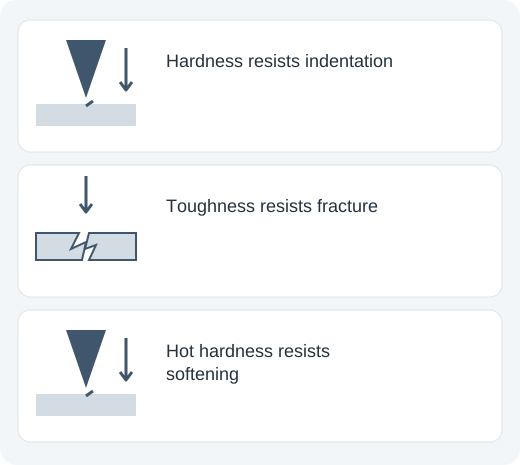
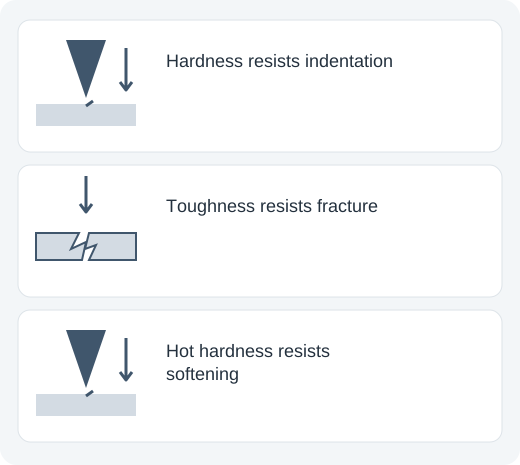
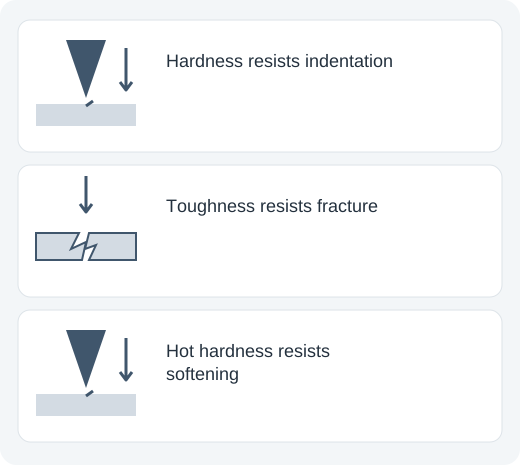
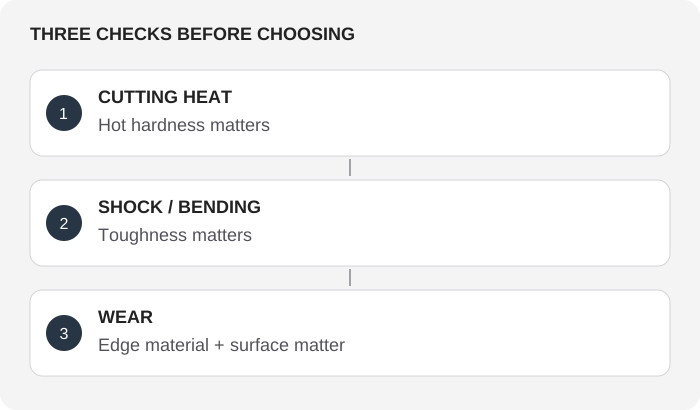
For a beginner, the useful distinction is this: hardness resists indentation and often supports wear resistance; toughness resists fracture when energy is absorbed; hot hardness helps a cutting edge retain properties at temperature. The best design balances the properties its job actually needs.
HARDNESS AND ROCKWELL MEASUREMENTS
Hardness tests measure a material’s resistance to a defined indentation under defined conditions. Rockwell C, written HRC, is commonly used for hardened steels, but other scales and tests exist. Numbers from different scales are not directly comparable without an appropriate conversion and context.
A hardness value describes the tested condition and location, not every property of the complete tool. Surface-hardened parts can have a hard outer layer and a tougher interior. Coatings and small geometries can require different measurement methods.
Do not rank finished tools from one advertised HRC number. Edge geometry, heat-treatment consistency, alloy, surface condition and intended loading also matter. A harder tip can wear slowly yet chip sooner in an unsuitable impact or bending application.
TOUGHNESS, WEAR AND HEAT
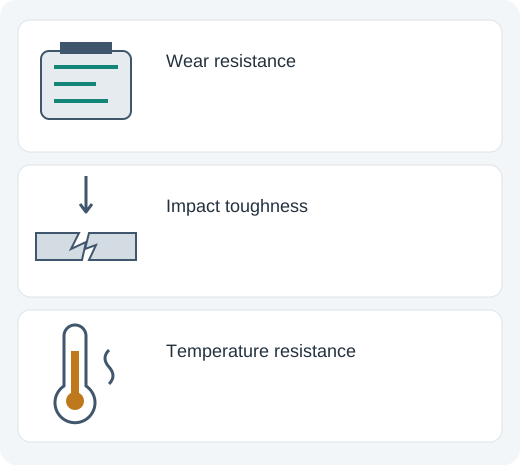
Toughness is resistance to fracture while absorbing energy. It matters where a tool experiences shocks, bending or stress concentrations. A material can be hard and still brittle. The shape and thickness of the tool influence where stresses concentrate.
Wear resistance helps a cutting edge or contact surface keep its shape under use. It can come from alloy composition, hard particles, heat treatment and suitable coatings. More wear resistance is not automatically more resistance to every kind of breakage.
Hot hardness is particularly important for cutting operations that generate heat. An edge that softens at temperature may wear quickly. Correct speed, feed and cooling still matter: heat-resistant material is not permission to run an unsuitable drilling process.
WHAT HARDENING AND TEMPERING DO
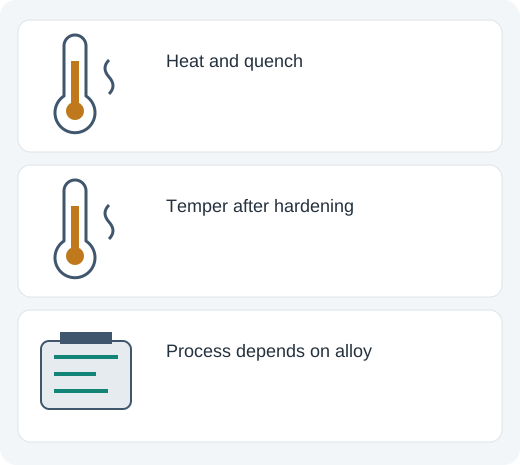
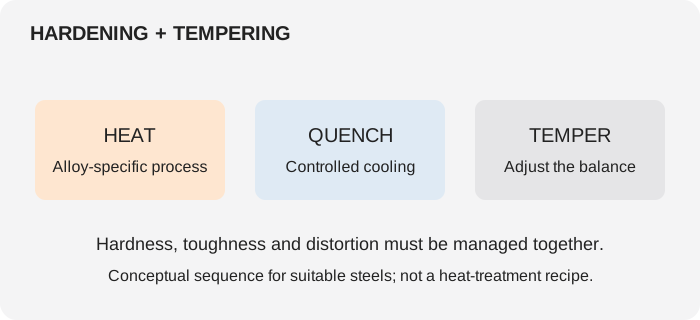
Heat treatment changes a material’s structure and properties. For many steels, hardening involves an appropriate heating and quenching process, followed by tempering to adjust the balance of hardness, toughness and internal stresses.
The correct temperatures and process depend on the alloy, section, intended use and manufacturing method. There is no universal workshop recipe that safely upgrades every tool. Overheating, improper quenching or an unsuitable temper can cause distortion, cracking or unwanted softness.
Induction hardening, case hardening and through-hardening affect different regions or structures. A hard surface with a tougher core can be valuable for some parts; a cutting tool may require another approach. Read the manufacturer’s complete specification rather than assuming that “hardened” means one fixed hardness throughout.
HIGH-SPEED STEEL: HSS
HSS is a family of tool steels designed to retain useful cutting properties at elevated temperatures compared with many simpler steels. It is common in drill bits and other cutting tools. Specific grades, geometry and processing vary.
HSS can be a practical choice for many general metal-drilling tasks and appropriate wood or plastic applications. It can offer a useful balance of cost and robustness. A basic HSS bit with correct geometry and good sharpening can outperform a premium-material bit used at the wrong speed.
The term HSS alone does not identify every alloying element or hardness value. Use the stated grade and intended material range when available. A gold-colored surface does not tell you the underlying HSS grade.
COBALT-ALLOY HSS: M35 AND M42
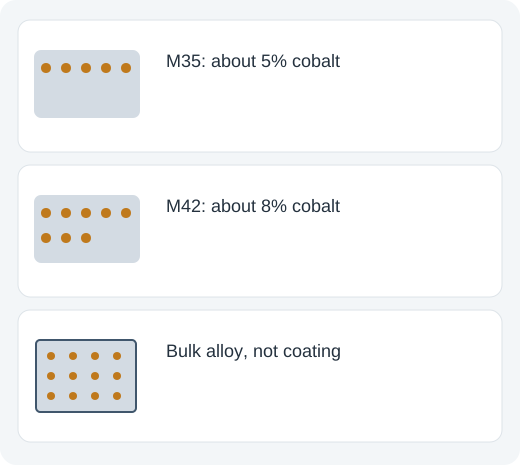
Cobalt drill bits are usually HSS alloys containing cobalt, not pure cobalt tools. Common examples include M35 with approximately 5% cobalt and M42 with approximately 8%, although the finished product specification must confirm the actual material.
These alloys can improve hot hardness and suit demanding metal drilling, including appropriate stainless-steel work. Their benefits are especially relevant when a cutting edge experiences heat. Correct point geometry, rigidity, feed and suitable cooling remain essential.
More cobalt does not mean unconditionally better. Different grades can trade properties such as toughness, wear and heat resistance. A bit used in an unstable handheld setup can fail for reasons that its cobalt percentage does not solve.
ARE COBALT STEP BITS THE BEST?
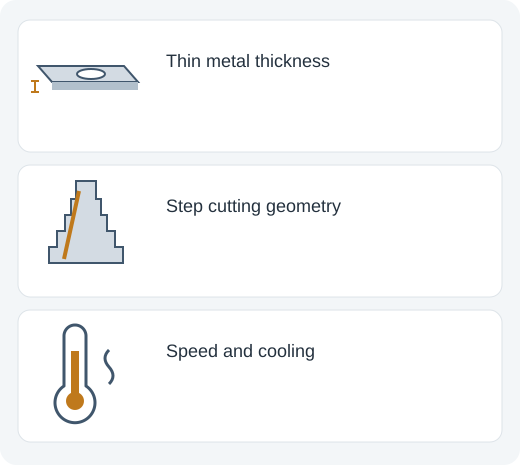
A step bit cuts several diameters and is especially useful within its rated thin-material range. Cobalt-alloy HSS can be a good choice for suitable harder metals and heat-demanding tasks. It does not make a step bit appropriate for every thickness, material or tool.
Step height limits the thickness that can be cut at a given diameter. Flute form, point, coating, shank, tool speed and chip clearance affect the result. A conventional HSS step bit may be entirely adequate for a lighter task, while another process may be better for thick stock.
For stainless steel, choose a bit explicitly rated for the job and follow its speed, feed and lubrication guidance. Avoid assuming that a premium alloy permits excessive speed or rubbing without a proper cut. The best purchase is the complete bit design suited to the work, not the highest cobalt number in isolation.
CARBIDE AND CARBIDE-TIPPED TOOLS
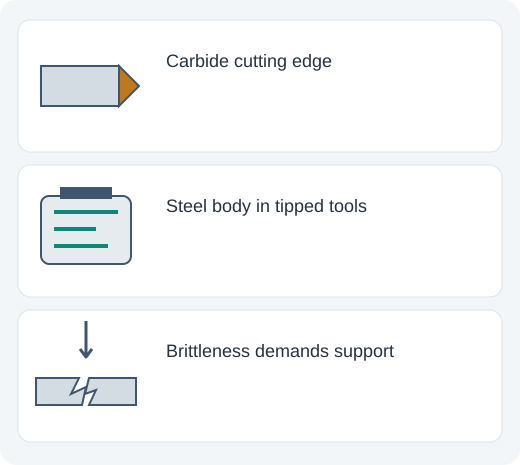
Cemented carbide commonly combines hard carbide particles with a binder. It provides high wear resistance and useful hot properties in suitable cutting applications. It is used in solid-carbide tools and as tips or inserts on other bodies.
Carbide can be more brittle than suitable HSS designs. Rigidity, edge geometry, vibration and impact conditions matter. A carbide-tipped masonry bit operates as a complete purpose-designed system; that does not make every solid-carbide metal bit suitable for hammering.
Select carbide tools according to material, machine or handheld setup and operating method. Good cutting performance in a rigid machine does not guarantee equal robustness in a poorly supported handheld job.
HAND-TOOL STEELS: CR-V, CR-MO AND S2
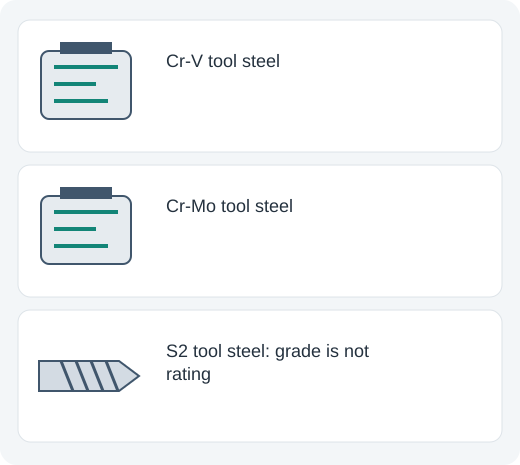
Chromium-vanadium steel is common in many hand tools, while chromium-molybdenum is common in suitable impact tools. S2 and other tool steels are used in screwdriver bits and related accessories. These names describe alloy families, not a universal quality ladder.
Impact suitability depends on material, heat treatment, geometry and the manufacturer’s rating together. A socket cannot be declared impact-safe merely from the Cr-Mo label, and a black coating cannot substitute for an impact rating.
Bits also need a balance between wear resistance and resistance to torsional failure. A very hard but brittle tip may chip; a tip that deforms too easily may round. The appropriate material and treatment depend on manual, powered and impact use.
COATINGS: TIN, TIALN AND OTHERS
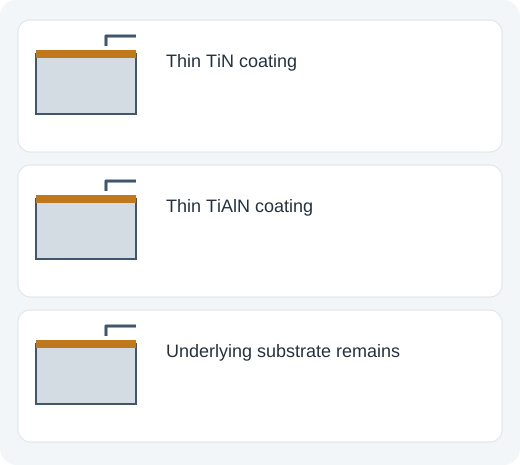
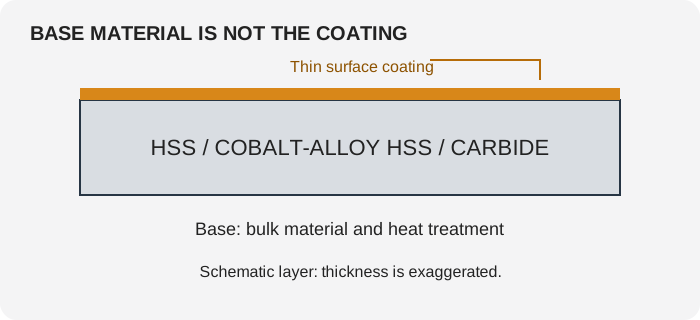
A coating is a surface layer; it is not the base material. Titanium nitride, or TiN, is often associated with a gold appearance on cutting tools. Other coatings such as TiAlN or AlTiN can serve different cutting-temperature and wear conditions in appropriate products.
Color alone is unreliable because decorative or other finishes can look similar. A coated HSS bit remains an HSS-based tool. A coating does not correct a wrong cutting geometry or make a wood-only tool suitable for metal.
Sharpening can remove coating from the newly exposed cutting edge. The underlying material and sharpening method therefore matter. Do not assume that an old coated bit retains the same surface condition after repeated regrinding.
DIAMOND, ABRASIVES AND SPECIALTY MATERIALS
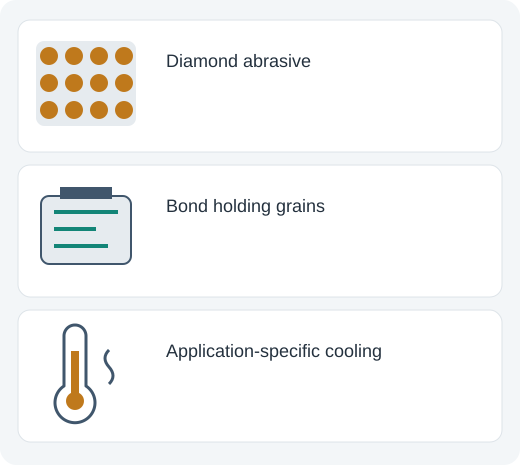
Diamond abrasives are used in appropriate cutting and grinding of hard nonferrous or mineral materials, including some tile and stone applications. They are not a universal replacement for all metal-cutting tools. The bond, particle arrangement, cooling and work material control suitability.
Ceramic and other abrasive grains suit particular removal and finishing tasks. Their performance is part of a designed abrasive product with a backing, bond and operating rating. A high-hardness particle does not make the complete disc safe at every speed.
Specialty materials are useful when their strengths match the process. Avoid treating a list of materials as a shopping ranking without considering what the tool must actually do.
CHOOSING BY JOB RATHER THAN HEADLINE
For general metal drilling, compare a suitable HSS design with the material and duty cycle. For demanding heat-producing metal work, consider rated cobalt-alloy HSS or another appropriate cutting tool. For a rigid precision process, carbide may be useful when the setup supports it.
For powered impact fastening, choose explicitly impact-rated sockets, bits and adapters. For manual tools, choose geometry, fit and ratings suited to the required load. The same material recommendation should not be applied to every category.
Ask four questions: what material is being worked; what load or heat will the tool experience; what operating setup is available; and what failure mode needs to be avoided? These questions are more useful than “Which metal is strongest?”
READING SPECIFICATIONS AND DIAGNOSING FAILURE
Look for exact alloy or grade, intended application, coating, operating limits and any published test method. A generic “premium hardened steel” label provides less useful information than a clear material and use specification.
Wear, chipping, bending and overheating point to different issues. A rounded bit may be worn or incorrectly fitted; a broken tip may have seen excessive load or poor alignment; a discolored cutting edge may have overheated. Diagnose the process as well as the material.
Replace damaged tools and correct the cause before repeating the operation. Buying a harder material without fixing fit, speed, support or cooling can reproduce the same failure. The tool’s material is one part of an operating system.
A DEEPER EXPLANATION OF HSS, COBALT-ALLOY HSS AND CARBIDE
High-speed steel is a family of tool steels designed to retain useful cutting properties at elevated temperatures. Its performance depends on the exact grade, heat treatment and cutting geometry. The letters HSS identify a material family, not a complete drilling-performance specification. A well-ground, properly used HSS cutter can be more useful than a higher-priced cutter with the wrong point or poor support.
In common cobalt-alloy HSS grades, cobalt is part of the bulk alloy. M35 commonly contains about 5% cobalt and M42 about 8%, alongside other alloying elements. These percentages should not be read as a linear quality score. The grade’s properties and heat treatment affect hot hardness and other characteristics; increasing one desirable property can introduce tradeoffs in toughness or cost.
Carbide cutting tools use a different material system, commonly hard carbide particles held by a metallic binder. Solid-carbide cutters and carbide-tipped tools are also different constructions. Carbide can provide excellent wear resistance and hot cutting performance in suitable conditions, but edge brittleness makes rigidity, runout, interrupted cutting and operating technique important.
The practical comparison starts with material, cutter geometry and setup. Ask whether the workpiece is thin sheet or solid stock, whether the tool is handheld or rigidly mounted, whether interrupted cutting is involved, and what speed and cooling are permitted. Only then compare substrate grades. Cobalt content does not override these application requirements.
A WORKED STEP-BIT COMPARISON FOR A THIN METAL PANEL
Suppose you need a clean opening in a thin metal panel. First identify the exact panel material, thickness and hole diameter. Choose a step geometry whose specified cutting height at the required diameter can accommodate that thickness. A step bit’s largest marked diameter does not mean that it can make a cylindrical hole of that diameter through arbitrarily thick material.
Compare an appropriate HSS bit, cobalt-alloy HSS bit and any other cutter approved for this job. For a difficult alloy or heat-prone application, cobalt-alloy HSS may be beneficial, but the manufacturer’s material approval and operating guidance are the relevant evidence. A generic gold-colored surface does not prove cobalt content; gold may be a coating, and a cobalt-alloy bit does not need to be gold.
Secure the panel and use the recommended speed, feed and cutting fluid where specified. Poor support can cause catching, deformation or edge damage; unsuitable speed can generate heat faster than the cutter handles it. Even a premium substrate will not cure an oversized unsupported opening, excessive thickness or an incompatible cutting method.
Assess the result by hole size, edge quality, required effort, heat behavior and usable tool life under comparable conditions. If the cutter fails, inspect the failure pattern: wear, chipped edges, overheated discoloration and broken shanks suggest different causes. Do not assume that every failure means the alloy was too soft; geometry, support and operating technique must be reviewed too.
VISUAL REFERENCE ATLAS
AT A GLANCE
Illustrations explain the principle. They are not actual-size templates or precision fit drawings.
REFERENCES
General reference material. For an exact model, use its manufacturer’s specifications and instructions.
High-speed steelHeat treatingRockwell scaleCemented carbide